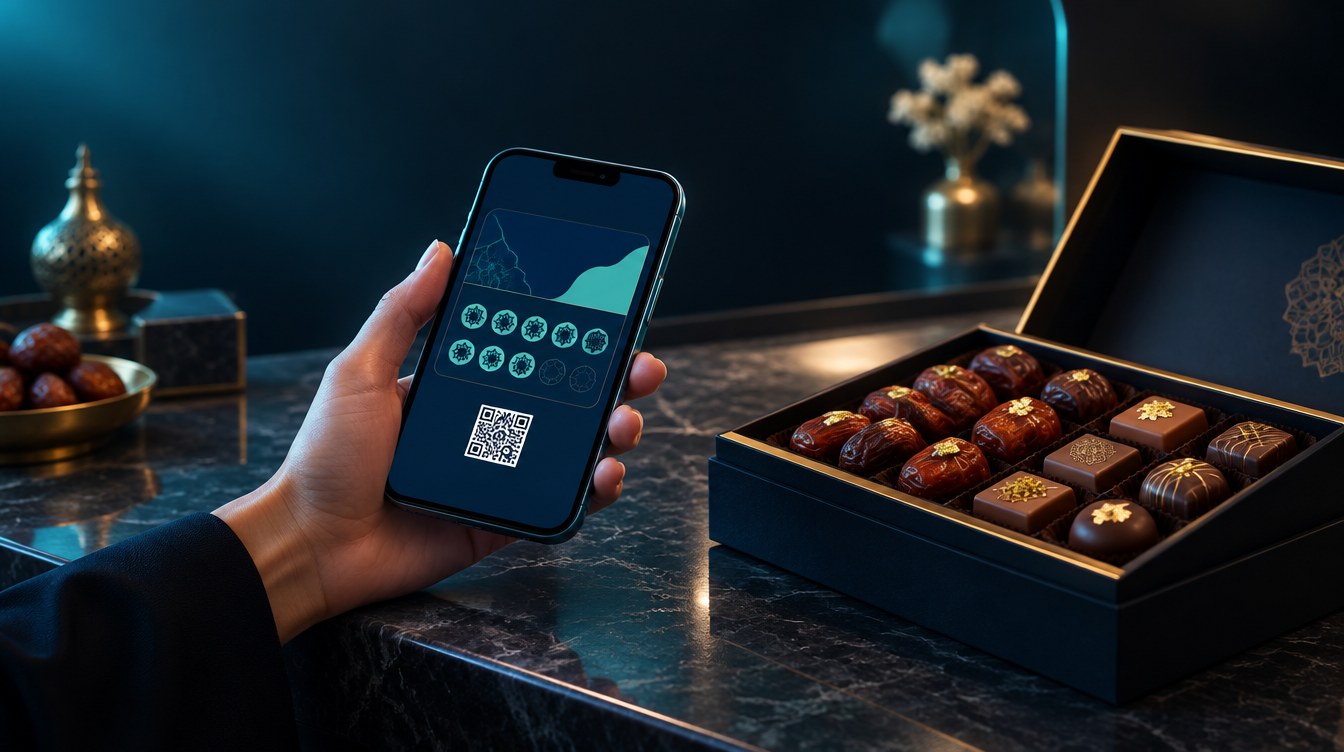
A chocolate and dates shop has the strangest customer problem in retail: the product almost never stays with the person who paid for it. The box leaves for a wedding, a majlis, a hospital room, an office tower. Your buyer might spend AED 4,000 a year with you — and walk out of the shop as anonymous as a tourist buying a bottle of water. A chocolate shop loyalty program built on Apple Wallet and Google Wallet fixes exactly that: it puts a name, a card, and a reason to return on the person doing the gifting, in one scan at the till.
The Gifting Paradox: Your Best Customers Are Invisible
Most retail loyalty logic assumes the buyer consumes what they buy. Gifting retail breaks that assumption, and it changes what churn looks like.
The purchase is occasional, but the customer is not. The same person buys for Eid twice a year, for three weddings, for every new baby in the family, for the office. Each visit is weeks or months apart, which is exactly long enough to forget which shop it was — especially in a mall with four chocolatiers on the same floor.
The recipient remembers the box. The buyer remembers nothing. Your branding works hard on the person who received the gift, and not at all on the person who chose you. When the next occasion arrives, the buyer starts from zero: whichever shop is nearest, or whichever one a colleague mentions.
Corporate buyers are the biggest and the most anonymous of all. The PA who orders 60 Ramadan boxes pays by company card, collects, and disappears. No name, no number, no way to reach them next September — when they will be ordering 60 boxes from someone.
Paper stamp cards don't survive this rhythm. A card used every few months is a card lost, and nobody carries a wallet of cardboard to a mall anyway.
What a Wallet Loyalty Card Changes at the Till
A wallet pass is a live card that sits in the phone's built-in Wallet app, next to boarding passes and bank cards. There is no app to download and no form to fill at the counter — the customer scans a QR code while you box the order, and the card is on their phone before you've tied the ribbon.
From that moment, the economics of the shop change in four ways.
Every gifter gets a reason to come back to you. A digital stamp card — every box stamps toward a free one — or points on spend, which suits gifting better because a wedding order and a 100g bag shouldn't earn the same. The balance sits on the customer's phone, impossible to lose between occasions.
The occasions calendar becomes your marketing calendar. Wallet passes receive free lock-screen messages — no SMS credits, no email open rates. "Eid collection now open for pre-order." "National Day gift boxes — order by Thursday for delivery." "Fresh Medjool harvest just arrived." These land two weeks before each occasion, precisely when your customer is about to decide where to buy, and they cost you nothing to send.
Corporate buyers finally have a card. Give the office managers and PAs their own tier or a dedicated corporate card. When Q4 gifting season opens, one lock-screen message — "Corporate gifting catalogue ready, reply on WhatsApp to reserve your date" — reaches every company buyer you served last year. That message alone can be worth a month of walk-in trade.
Recommendations start to travel. The back of every pass carries your join link and WhatsApp. When someone at the majlis asks where the dates are from, the answer can become a member on the spot — the recommendation finally has something to ride on.
Stamps, Points, or Both?
For a chocolate and dates shop the honest answer is points on spend, with one exception. Points respect the huge range between a small bag and a corporate order, and they let you run double-points weeks before Eid and National Day to pull the occasion forward. The exception is a café corner: if you also serve coffee and per-piece sweets, a parallel stamp card for the sixth coffee free keeps the daily habit alive alongside the occasion spend. A wallet card can carry either — or a tier that upgrades the card's colour when a customer crosses corporate-level spend, so your best buyers can see they're recognised.
Whatever you choose, keep redemption tangible: a free signature box, not a percentage. In gifting, "your next gift is on us" is a stronger sentence than "10% off".
Why September Is the Month to Set This Up
In the UAE, the gifting year is about to hit its densest stretch: Q4 corporate gifting, National Day, the winter wedding season, then the run-up to Ramadan. Every box you sell between now and then is a chance to enrol the buyer — so the shop that starts scanning members in September walks into its busiest season holding a list of proven gift buyers it can message for free.
The setup itself is an afternoon, not a project. Design the card in your branding, put the join QR on the counter and on every delivery box, and brief the team on one sentence: ask for the scan while you pack the order. It works alongside whatever POS you already run, and it pairs naturally with a digital gift card if you sell those too — the same Wallet, the same one-scan behaviour, the same retail toolkit.
What It Looks Like After One Season
Run it through one gifting cycle and the shop owns something it has never had: a named list of the people who actually buy — the Eid regulars, the wedding-order families, the corporate PAs — each carrying your card on their phone, each reachable on the lock screen before the next occasion, each a few stamps or points from a reward they don't want to abandon. The recipient still keeps the box. But from now on, you keep the buyer.
Book a short demo with Wally and see your own chocolate shop loyalty card in Apple Wallet and Google Wallet — joined in one scan at the till, earning on every box, and messaging your gift buyers for free before Eid, National Day, and the corporate season.