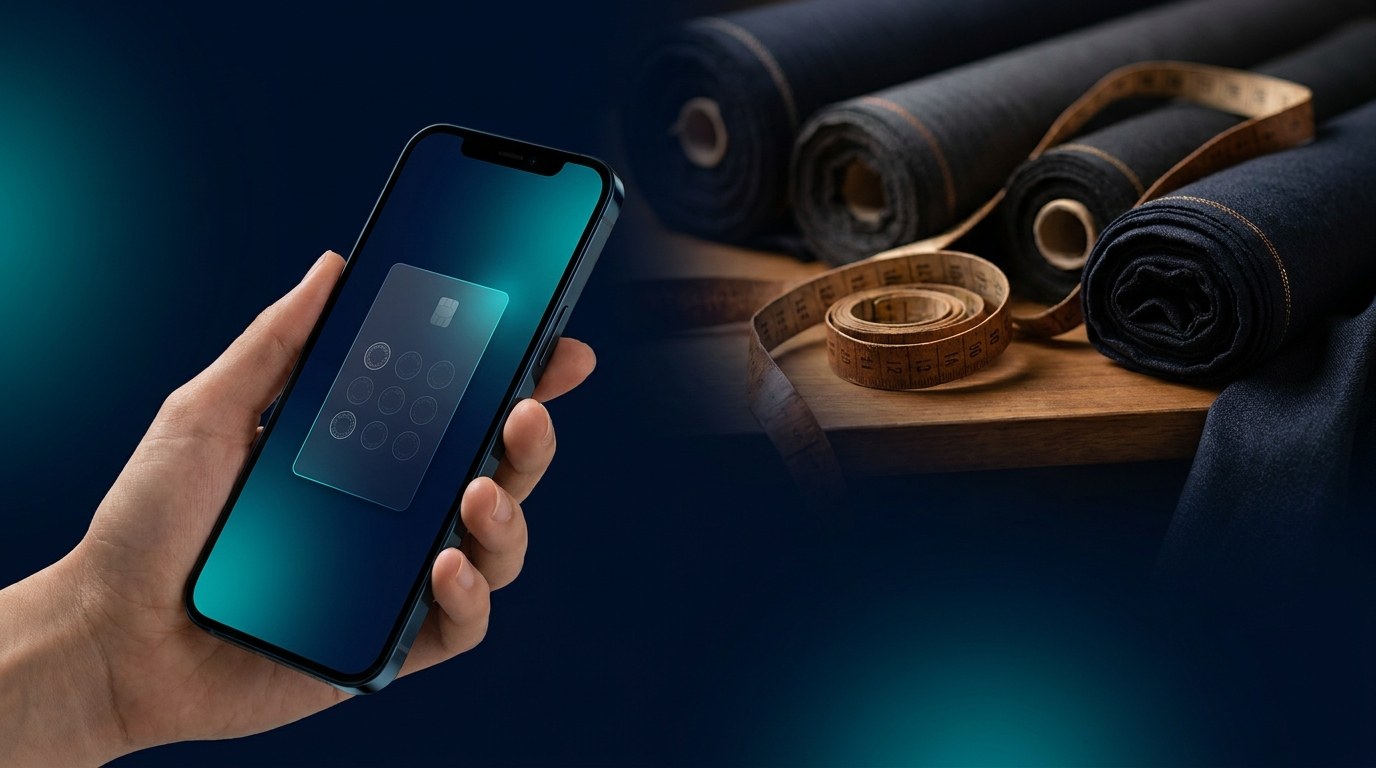
A tailor shop holds a retention asset almost no other business has: the customer's measurements, on file, ready for the next order. In theory, nobody should switch tailors — starting over means being measured again, explaining preferences again, gambling on a first garment again. And yet customers drift constantly: to the shop nearer the new office, to the tailor a cousin mentioned, to whoever answered WhatsApp first in the week before Eid. A tailor shop loyalty program exists to close that gap — to make the customer you've already measured visibly better off staying with you than starting from zero somewhere else.
Measurements on File Don't Keep Customers. Being Remembered Does.
Tailoring is an occasion business. A customer orders kanduras before Ramadan and Eid, a suit before a wedding, abayas before the season changes, school uniforms altered in September — and between those moments, months of silence. The shop that did beautiful work in March is competing, by November, with every tailor the customer walks past. There's no bad experience behind the switch. The customer simply wasn't reminded, and the shop had no way to reach them beyond hoping they kept the receipt with the phone number on it.
That silence is expensive, because a tailoring customer compounds. The man who orders four or five kanduras a year, the family that brings every wedding and every school season to your counter, the office that sends its alterations — each is worth thousands of dirhams a year, for years. Losing one to drift costs far more than any walk-in can replace, and winning them back later is much harder than keeping them would have been.
What a Tailor Shop Loyalty Program Looks Like in a Wallet
Paper stamp cards die in the glovebox, and nobody downloads an app for their tailor. The card that works lives where the customer already looks a hundred times a day: Apple Wallet and Google Wallet on their phone.
With Wally, joining takes one scan of a QR code at your counter — no app, no form, no password. And tailoring has the perfect joining moment built in: the customer is standing at your counter twice per order, once to be measured and once to collect. While the garment is being wrapped, they scan, and your card is on their phone before the bag is handed over.
From there, the mechanics fit the trade naturally:
A stamp per garment. A digital stamp card — every finished piece earns a stamp, the sixth garment stitched free or at half price. The customer three kanduras in doesn't try the new shop near the office, because leaving means walking away from progress they can see on their phone.
Points on fabric and the big orders. Wedding orders, full Eid wardrobes, corporate uniform runs — the high-ticket work earns points toward future stitching. Suddenly there's a reason to buy the fabric from your rolls instead of bringing it from the souq.
Your shop on the back of the pass. The back of the card carries your WhatsApp number, location, and opening hours. When the occasion arrives, ordering is one tap — not a search that lists every tailor in the neighborhood above you.
The Eid Rush Is a Retention Problem in Disguise
Every tailor knows the two speeds of the trade: the quiet weeks, and the two weeks before Eid when the shop runs past midnight and still turns customers away. Both are the same problem — demand you can't shape, because you can't reach your customers before they walk in.
A wallet card changes that, because every member can receive free lock-screen messages. Six weeks before Ramadan: "Order your Eid kanduras now — beat the rush, collect before the last week." When wedding season opens: "Booking November orders now." In the slow summer: "Double stamps on all orders this month." You're no longer waiting to see who remembers you; you're deciding when the orders arrive — and the regulars who order early smooth out the crush that used to cost you walk-ins at the peak.
One Card, the Whole Family — and the Majlis
Tailoring travels through families and friends. A father brings his sons' orders with his own; a good kandura gets asked about in the majlis; a bride's tailor gets recommended to every guest who admires the work. That word of mouth is the best marketing in the trade — and it usually evaporates on the drive home, because "I'll send you his number" rarely survives the evening.
On a wallet card, the recommendation has something to travel on. Your join link rides on the back of every member's pass: the conversation ends with a scan, and the friend has your card — and your WhatsApp — before the coffee is finished. Add a bonus stamp for both sides and you've turned the majlis into a referral system that runs itself.
Set It Up Before the Season Does
The setup takes an afternoon: design your card, set the stamp rule, print one QR code for the counter, and start scanning customers in as they collect. Every order from today on turns an anonymous walk-in into a member you can reach free — before this wedding season, before the next Ramadan, and before every Eid after that.
Book a quick demo with Wally and see your own tailor shop loyalty card in Apple Wallet and Google Wallet — stamps per garment, points on fabric, and your WhatsApp on the back of every pass.