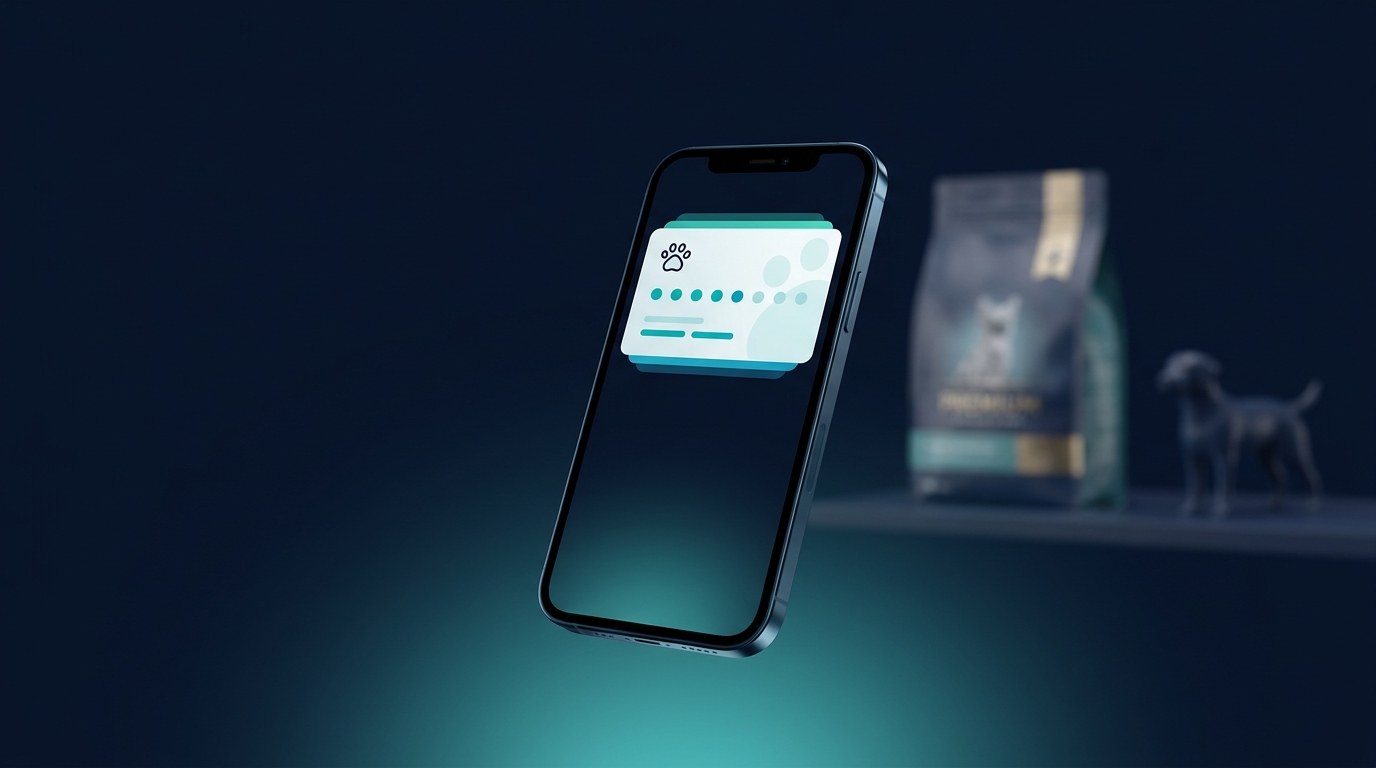
A 10kg bag of dog food runs out in about five weeks. Cat litter, roughly a month. Flea treatment, monthly. A pet shop's core products are subscriptions in disguise — the refill date is practically printed on the bag — and yet most shops treat every sale as a walk-in and let the reorder go to whoever is most convenient that day. Increasingly, that's a delivery app or an online pet store, not the shop that gave the advice and made the first sale. A pet shop loyalty program that lives in Apple Wallet and Google Wallet is how you keep the refill: it's joined in one scan at the till, it turns every bag into visible progress toward a free one, and it reminds the owner you exist in the exact week the food runs out.
The Refill Clock Every Pet Shop Sits On
Think about what a single new customer is actually worth. A dog lives ten to fifteen years and eats through ten or more bags of food a year. Add treats, toys, shampoo, litter, a new leash — a captured pet owner is hundreds of purchases over a decade, on a schedule more predictable than almost any other retail business. The UAE's pet population keeps growing, and every new puppy or kitten that walks through your door is a ten-year revenue stream deciding, in the first month or two, where the refills will come from.
That decision window is short. The first bag is bought in person — the owner wants advice, needs it today, and trusts the shop that answered their questions. The second bag is where the leak starts: the food runs low on a Tuesday night, the owner can't remember when the shop closes, and an online store delivers the same brand by tomorrow morning. Do nothing, and by bag four the reorder is a subscription on someone else's platform. You did the expensive part — the advice, the trust, the first sale — and the profitable part walked off to the internet.
What a Pet Shop Loyalty Program Looks Like in a Wallet
Forget paper punch cards — on a monthly purchase cycle, a paper card is forgotten or lost long before it's full. And forget asking anyone to download an app for a pet shop; customers don't download apps for the places they visit once a month. A wallet pass takes the opposite approach: a QR code on your counter, one scan while you're carrying the bag to the car, and your branded card is in the customer's Apple Wallet or Google Wallet. No app, no form, no password.
On that one card you can run the whole shop:
A stamp per bag. Every bag of food is a stamp toward a free one — eight stamps is a natural fit for a monthly cycle, and the card in the wallet always shows the live count. A customer five stamps in has a concrete reason to drive past the competitor and to skip the delivery app: the free bag is theirs only at your till.
Points on everything else. Toys, treats, grooming shampoo, the impulse squeaky toy at the counter — points make the whole basket count, not just the food, the way the best retail loyalty programs do.
One card for services too. If you offer grooming or boarding, the same pass carries those visits as well — and grooming has its own powerful repeat cycle worth capturing on the same card.
The Week-Five Nudge That Beats the Delivery App
Here's the part no paper card and no plastic tag can do: a wallet pass can send free messages straight to the lock screen of everyone who joined. No SMS fees, no email that lands in Promotions, no algorithm deciding who sees it. The single most valuable message a pet shop can send costs nothing and takes one line: "Running low? Your next bag is stamp 6 of 8 — free delivery this week." Sent at week five, it lands before the bag runs out — which means before the owner opens the delivery app. The reorder goes to whoever shows up first, and the lock screen is how you show up first.
The same channel fills the quiet days: a weekend double-stamp offer, a new food line arriving, a grooming slot going spare on a slow Tuesday. Every message goes to opted-in customers who chose to carry your card — the audience most likely to act on it.
New-Pet Customers Are Ten-Year Customers
The most important scan of all is the first-time owner. Someone who just brought home a puppy buys everything at once — bed, bowls, crate, food, toys — and has no habits yet. That's the single best moment to put your card in their wallet: one scan at the till, and the customer with the highest lifetime value in your shop is on your member list from day one. From then on, every refill nudge, every new-arrival message, every free-bag milestone compounds over a decade of ownership.
Compare that with the shop next door, where the same customer pays cash, leaves, and becomes anonymous — reachable only by whichever ad platform they happen to scroll past.
Set It Up in an Afternoon
None of this needs an IT project. With Wally you design the card, print the QR code, and put it by the till — that's the whole rollout. Customers join in one scan; staff stamp with a tap; the dashboard shows who's active, who's gone quiet, and who's one stamp from their free bag. It costs a fraction of what the delivery platforms take in commission on a single month of lost refills.
The refill clock is already ticking on every bag you sold this month. The only question is whose counter the customer is standing at when it runs out. Book a quick demo with Wally — stamp cards, points, and free lock-screen messages on one pass in Apple Wallet and Google Wallet, joined in one scan at your till.