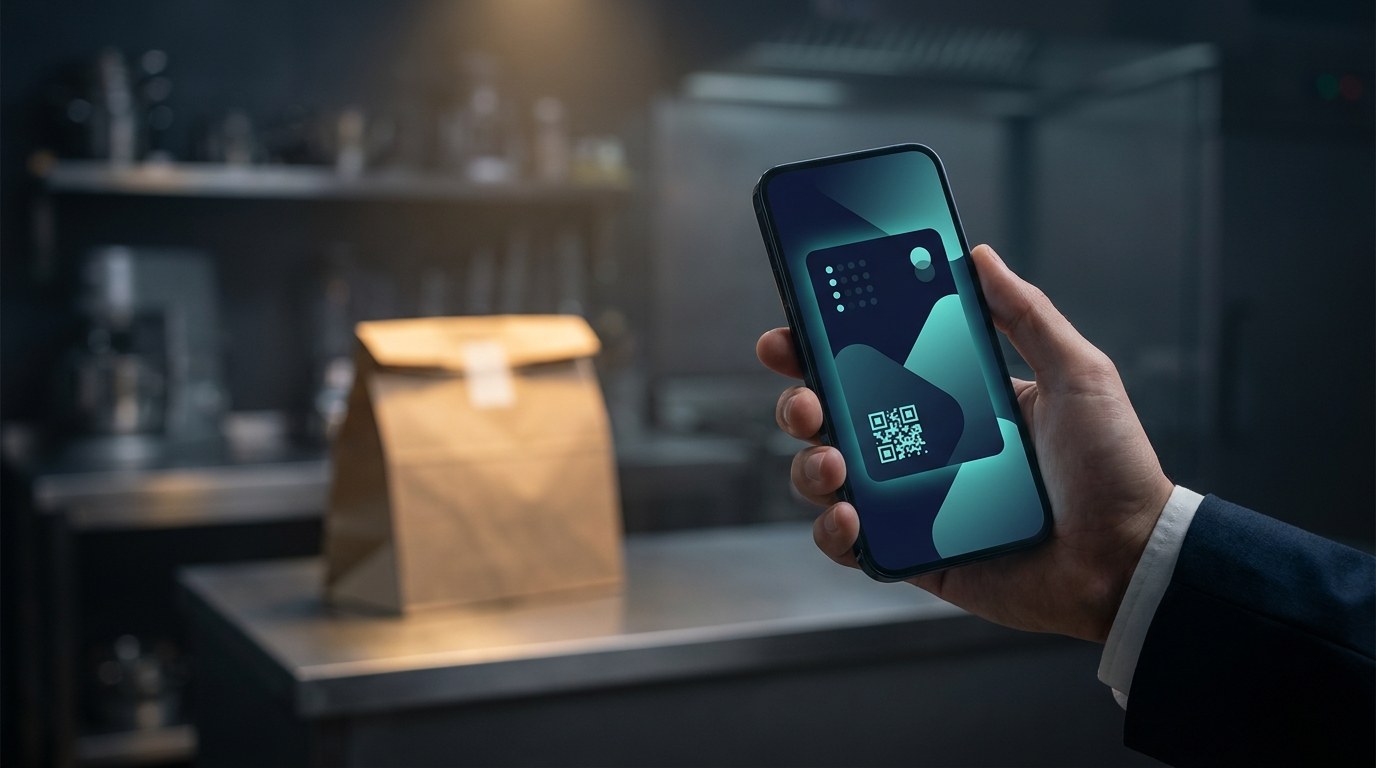
A cloud kitchen runs the leanest model in food: no dining room, no waiters, no prime-location rent — just a kitchen and a stream of delivery orders. But there's a hole in the model that gets bigger with every order: the apps that bring you those orders take 25–30% commission and keep the customer. You cook the meal, pack it, and send it out the door — and you never learn who ate it. The person who ordered from you three times this month is not your regular; they're the app's regular. A cloud kitchen loyalty program that lives in Apple Wallet and Google Wallet is how you change that: a card in every delivery bag, joined in one scan, that turns anonymous app orders into customers you can reach directly — for free.
The Platform Problem: You Own the Kitchen, They Own the Customer
Dubai is one of the busiest cloud kitchen markets in the world, and almost every kitchen in it lives entirely inside the delivery platforms. That means the platform sets the terms: commission on every order, your brand stacked in a list next to fifteen competitors, and paid placement if you want to be seen. Worst of all, the customer data — name, number, order history — stays with the platform. When they run a promo, your loyal customer gets shown someone else's biryani.
Restaurants with a dining room at least meet their customers face to face. A cloud kitchen never does. So the usual advice — build rapport at the counter, train staff to mention the loyalty card — doesn't apply. You have exactly one physical touchpoint with the customer: the bag that lands on their doorstep. That bag is your storefront, your counter, and your only chance to introduce yourself.
What a Cloud Kitchen Loyalty Program Looks Like Inside the Bag
Here's the mechanic. A small printed card goes into every bag: "Scan for a free side on your next order." One scan, and your branded loyalty card is in the customer's Apple Wallet or Google Wallet. No app to download — nobody downloads an app for one kitchen — no form, no password. Ten seconds between opening the bag and eating.
From that moment, the anonymous app order has a name. On one wallet card you can run the whole play:
A stamp per order. Every order is a stamp toward a free meal — the card in their wallet always shows the live count, so five stamps in, ordering from you again is finishing something they've already started.
Double stamps on direct orders. This is the move that pays for everything. Orders placed through your own WhatsApp or website earn two stamps instead of one. Every order you shift off the platform saves you the commission — on an AED 60 order, that's AED 15–18 back in your pocket. A handful of shifted orders per day covers the entire program many times over.
One kitchen, many brands. Running three virtual brands from one kitchen? Each can carry its own branded card — or one card can stamp across all of them, quietly turning your burger customer into your fried chicken customer too.
The Lock-Screen Message That Beats the App's Algorithm
The card in the wallet is the start. The channel it opens is the point: a wallet pass can send free messages straight to the lock screen of everyone who joined. No SMS fees, no ad auction, no algorithm ranking you against competitors. At 6:30pm — the exact moment dinner is being decided — "Tonight only: double stamps on direct orders" lands on the lock screen of every customer you've ever fed. The delivery apps charge you for that kind of placement; your own member list gives it to you for free.
The same channel launches your next virtual brand to an audience of proven buyers on day one, fills the quiet Sunday with a targeted offer, and wins back the customer who hasn't ordered in three weeks — a nudge sent only to lapsed members, which beats a blanket discount handed to everyone, loyal customers included.
The Numbers That Make It Obvious
Take a kitchen doing 40 orders a day at AED 60 average. At 28% commission, that's roughly AED 20,000 a month paid to the platforms. Now suppose the loyalty card shifts just 15% of orders to direct channels: that's around AED 3,000 a month back — from customers who were already yours, cooked by the same kitchen, packed in the same bag. The free meal you fund every ten stamps costs a fraction of that. And unlike paid placement on the apps, the member list compounds: every bag that goes out grows an audience you keep forever, whatever the platforms decide to charge next quarter.
It also fixes the fragility at the heart of the model. A cloud kitchen with 5,000 monthly orders and zero customer relationships is one algorithm change away from trouble. The same kitchen with 2,000 wallet cards in circulation has a business it actually owns.
Set It Up Before Tonight's Dinner Rush
None of this needs a developer. With Wally you design the card, print the QR insert, and drop one into every bag — that's the rollout. The dashboard shows who joined, who's gone quiet, and which brand they order from; stamps for direct orders take one tap. It works alongside whatever POS and aggregator setup you already run, the same way it does for restaurants with dining rooms.
Every bag you send out tonight either builds your member list or builds the platform's. Book a quick demo with Wally — stamp cards, direct-order rewards, and free lock-screen messages on one pass in Apple Wallet and Google Wallet, joined in one scan from the bag on the doorstep.