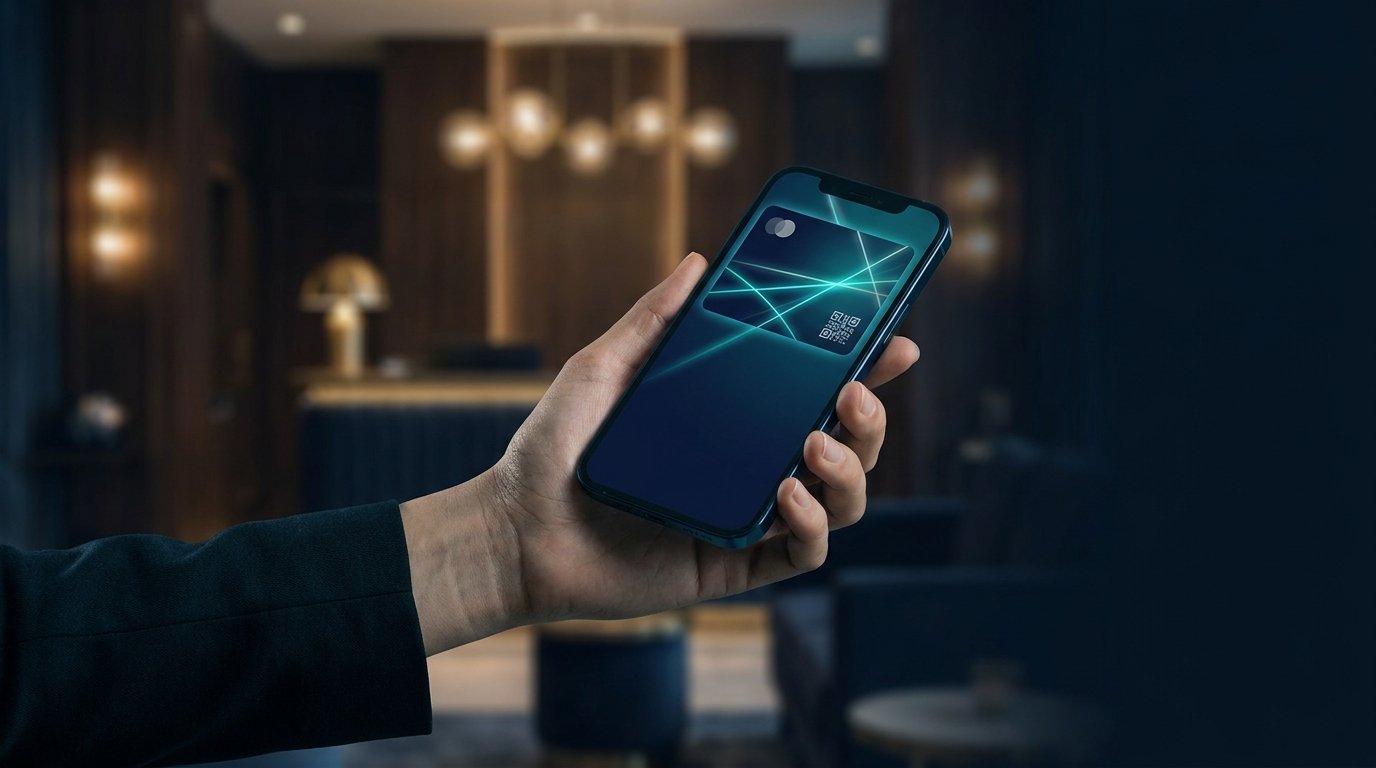
Every booking that arrives through an OTA costs a hotel 15–25% in commission. That's the deal independent hotels have accepted: the platforms bring the first stay, and they take a cut of every stay after that too — because most guests, even happy ones, go straight back to the same booking app next time. A hotel loyalty program exists to break that loop. Not with points schemes and plastic tiers, but with something much simpler: a reason and a reminder to book the second stay direct. The big chains have known this for decades. What's changed is that an independent hotel can now run one from a card in the guest's Apple Wallet or Google Wallet — added with one QR scan at the front desk, no app, no developer.
The Real Cost of the Second Booking
Take a typical city hotel in Dubai: AED 600 a night, three-night average stay. That's AED 1,800 in revenue — and if the booking came through an OTA at 20% commission, AED 360 of it is gone before housekeeping has turned the room. Now the same guest comes back six months later. If they book through the platform again, you pay the commission again — for a guest you already won.
That's the quiet math of hotel distribution: acquisition costs are a fact of life for the first stay, but paying them on the second, third, and fourth stay is a choice. Guests rebook through OTAs not out of loyalty to the platform, but because that's where the memory of your hotel lives. They remember the app; they don't remember your website. The whole job of guest loyalty is to move that memory somewhere you own.
Why a Hotel Loyalty Program Is Really a Direct-Booking Tool
Strip away the marketing language and a hotel loyalty program has one job: make the direct channel the obvious way to come back. Everything in the program should serve that.
- A reason: a benefit guests only get when they book direct — late checkout, a room upgrade when available, a welcome drink, a member rate. None of these cost much on a night that would otherwise go to commission.
- A reminder: a way to reach the guest before the next trip is booked — not after, when the OTA confirmation email is already in their inbox.
- Zero friction: joining and using the program has to be easier than opening the booking app. If it isn't, the program loses by default.
Chains solve this with massive apps and points economies. Independent and boutique hotels don't need either — and honestly, shouldn't want either.
No Guest Downloads an App for One Hotel
The classic independent-hotel loyalty attempt is a branded app, and it fails the same way every time: a guest who stays with you twice a year will not download, register for, and keep an app for your property. We've written about why customers don't download apps — hotels are the hardest case of all, because the visit frequency is the lowest.
The wallet pass flips this. Apple Wallet and Google Wallet are already on every guest's phone, holding their boarding pass for the flight home. Your guest card lives in the same place: the guest scans a QR code at reception or checkout, taps "Add to Wallet," and it's done — about ten seconds, no download, no password. That card stays on their phone long after the stay, right next to the boarding passes and bank cards they use every week.
What the Guest Card Actually Does
A wallet-based guest card isn't a static voucher. It's a live channel back to the guest:
- It carries the offer. Member rate, late checkout, upgrade priority — the reasons to book direct sit on the card, visible every time the guest opens their wallet.
- It updates itself. Move a guest from Member to VIP after their third stay and the card changes on its own. No reprints, no emails asking them to log in.
- It reaches the lock screen. A message lands where guests actually look: before the season they usually travel, on the anniversary of their last stay, or when your suites have a quiet week. That's the reminder arriving before the OTA gets the booking.
- It works across the property. The same card can carry stamps for the café, a discount at the spa, or entry to the beach club — one pass for the whole hospitality operation, not just the room.
And because check-in is a scan, the front desk sees who's back, what tier they're on, and what they're entitled to — without asking the guest to prove anything. If you're already thinking about door access, wallet passes handle that too; see our guide to NFC access control for hotels and resorts.
A Simple Program You Can Launch This Month
You don't need a points engine to start. A working hotel loyalty program looks like this:
- Invite at checkout. A QR code at the desk: "Join our guest club — 10 seconds, no app." Checkout is the moment guests are happiest and the front desk has their attention.
- Put one clear direct-booking perk on the card. Member rate, guaranteed late checkout, or upgrade priority — pick one you can always honour.
- Message with intent, not volume. Two or three lock-screen messages a year, timed to when your guests actually book: before summer, before the holidays, before the event season.
- Extend it beyond the room. Spa visits, restaurant stamps, paid memberships for pool and beach day access — the more the card is used between stays, the more your hotel stays in reach.
- Count one number: repeat guests who booked direct. That's the commission you didn't pay.
The Takeaway
OTAs are a fair price for the first stay — and an unnecessary one for every stay after. A hotel loyalty program that lives in Apple Wallet and Google Wallet gives guests a reason to book direct, a reminder at the right moment, and a joining experience that takes one scan at the front desk. No app, no plastic, no points spreadsheet.
Want to see your hotel's guest card on your own phone? Book a quick demo with Wally — we'll put a branded card in your wallet in minutes.