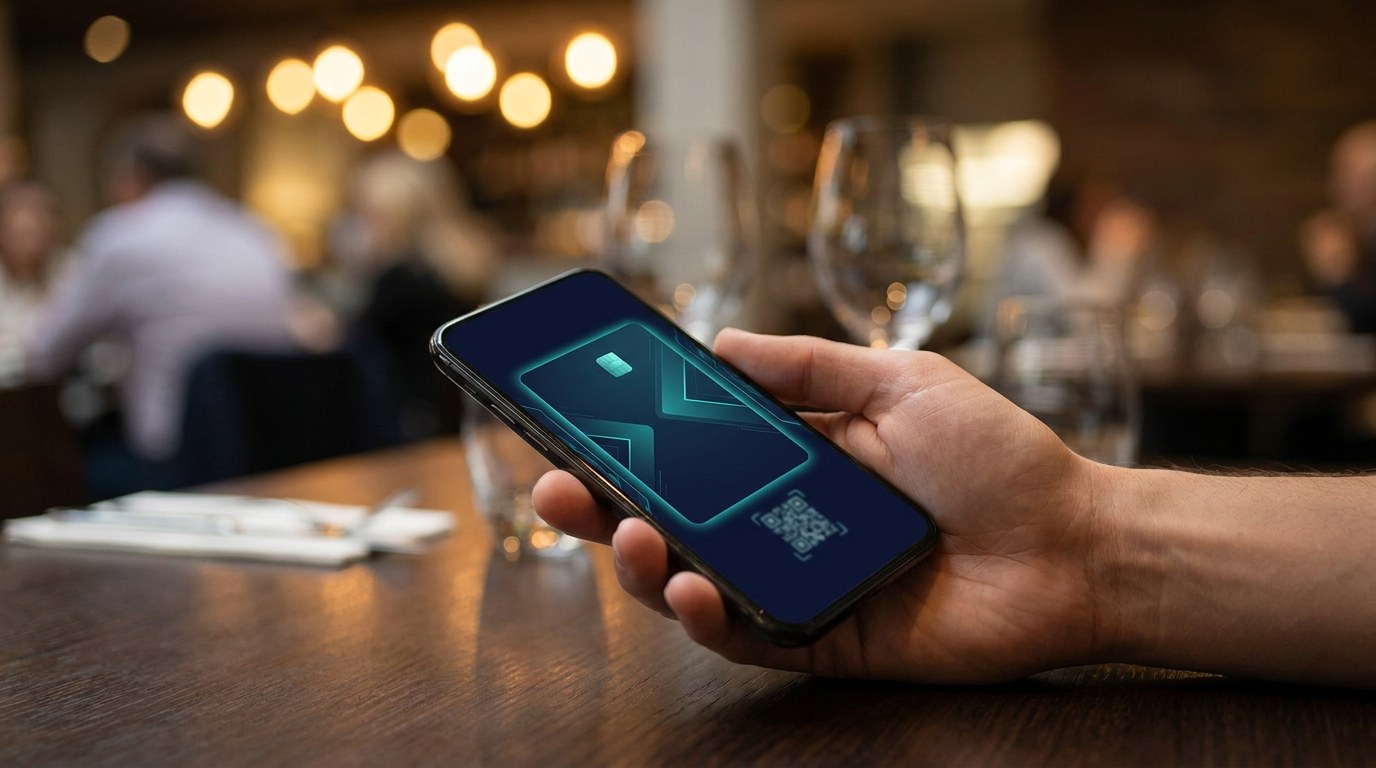
Here's the math most restaurant owners feel but rarely see written down: getting a new guest through the door costs five to seven times more than bringing back one who's already eaten with you — and repeat guests spend noticeably more per visit than first-timers. A good restaurant loyalty program is simply the machine that turns first visits into second visits. The problem is that most of the machines on offer are broken: paper punch cards get lost with the receipt, plastic cards never leave the junk drawer, and branded apps get downloaded by almost nobody. This is the case for a fourth option — the loyalty card that lives in Apple Wallet and Google Wallet, next to the guest's bank cards.
The Numbers Behind Repeat Guests
A few figures worth keeping on a sticky note by the till:
- Retention is cheaper than acquisition. Industry studies consistently put the cost of winning a new customer at five to seven times the cost of retaining an existing one. Every dirham you spend reminding a past guest to come back works harder than a dirham spent on ads chasing strangers.
- Small retention gains compound. Research popularized by Bain & Company found that increasing customer retention by just 5% can lift profits by 25% or more. In a business with restaurant margins, that's not a rounding error — that's the difference between a good month and a great one.
- Regulars order more. Returning guests already trust the menu, so they try the specials, add dessert, and bring friends. Repeat customers routinely spend more per order than new ones.
None of this is controversial. The question is why, if the economics are this clear, most restaurant loyalty programs quietly die within a few months. The answer is almost always friction — for the guest, for the staff, or for both.
Why Most Restaurant Loyalty Programs Fail
The paper punch card fails at the guest's end. It works only if the guest remembers to take it, keep it, and present it — three chances to fail on every visit. Cards get soggy, forgotten, and lost, and when a guest loses a card with seven stamps on it, you haven't just lost the card. You've lost the goodwill.
The plastic card fails at your end. You pay to print it, guests forget it at home, and it tells you nothing — no visit history, no way to reach the guest, no way to change the offer once it's printed.
The branded app fails before it starts. Guests have a limited appetite for downloading apps, and a single restaurant's app is near the bottom of the list. We've written before about why customers don't download apps — the short version is that even guests who love you won't give you 80 MB of their phone and another account password just to collect stamps.
What all three formats share: the loyalty card lives somewhere the guest doesn't look. The fix is to move it somewhere they do.
The Wallet Pass: A Loyalty Card Guests Actually Carry
Apple Wallet and Google Wallet are already installed on virtually every phone that walks into your restaurant. A wallet-based loyalty card uses that fact instead of fighting it:
- The guest scans a QR code — on the table tent, the counter, the receipt, or the delivery bag.
- They tap "Add to Wallet." No app, no form-filling marathon, no password. The whole join takes about ten seconds — short enough to finish while the card machine prints.
- The card is now in their pocket forever. It can't be lost, left at home, or put through the wash.
From there, the program runs itself. Every visit adds a stamp or points to the pass automatically, and the card updates on the guest's phone in real time — no ink, no debates about whether that fifth stamp was really earned. When the reward unlocks, the pass says so. If you want to see how the mechanics work, our digital stamp cards page walks through it step by step.
The Feature Plastic Never Had: Reaching Guests Between Visits
Here's where a wallet pass stops being a nicer punch card and starts being a marketing channel. A pass in Apple Wallet or Google Wallet can put a message on the guest's lock screen — no phone number needed, no SMS costs, no unread email.
That changes what a restaurant loyalty program can do:
- Quiet Tuesday? Push a two-for-one to everyone who hasn't visited in three weeks.
- New menu launch? Tell your regulars first — they're the ones who'll post about it.
- Guest one stamp away from a reward? A gentle nudge tonight beats a competitor's ad tomorrow.
And because every scan is logged, you finally see what the punch card never showed you: how often guests really return, which branch they visit, and how many rewards convert into extra visits. Restaurants across Dubai and the wider UAE are already running this playbook — we've covered several of them on our restaurants page.
What It Costs — and What It Replaces
A digital loyalty card replaces the recurring costs of the old formats: no card printing, no reprints when the design changes, no app development retainer. You design the card once, put one QR code on the counter, and every guest — iPhone or Android — gets the right pass from the same scan. Change the reward, the design, or the offer any time; every card already in guests' wallets updates itself.
For a single-location café or a multi-branch restaurant group, the setup is the same afternoon of work. The hard part of loyalty was never the idea — it was the friction. Remove the friction and the economics above start working for you on autopilot.
The Takeaway
Your regulars are the most profitable seats in the house, and a restaurant loyalty program is how you protect them. Just don't build it on formats guests have already rejected. Put the card in the wallet they open every day, stamp visits automatically, and use the lock screen to fill the slow nights.
Want to see your restaurant's loyalty card in your own Apple or Google Wallet before you decide anything? Book a quick demo with Wally — we'll have a branded card on your phone in minutes.