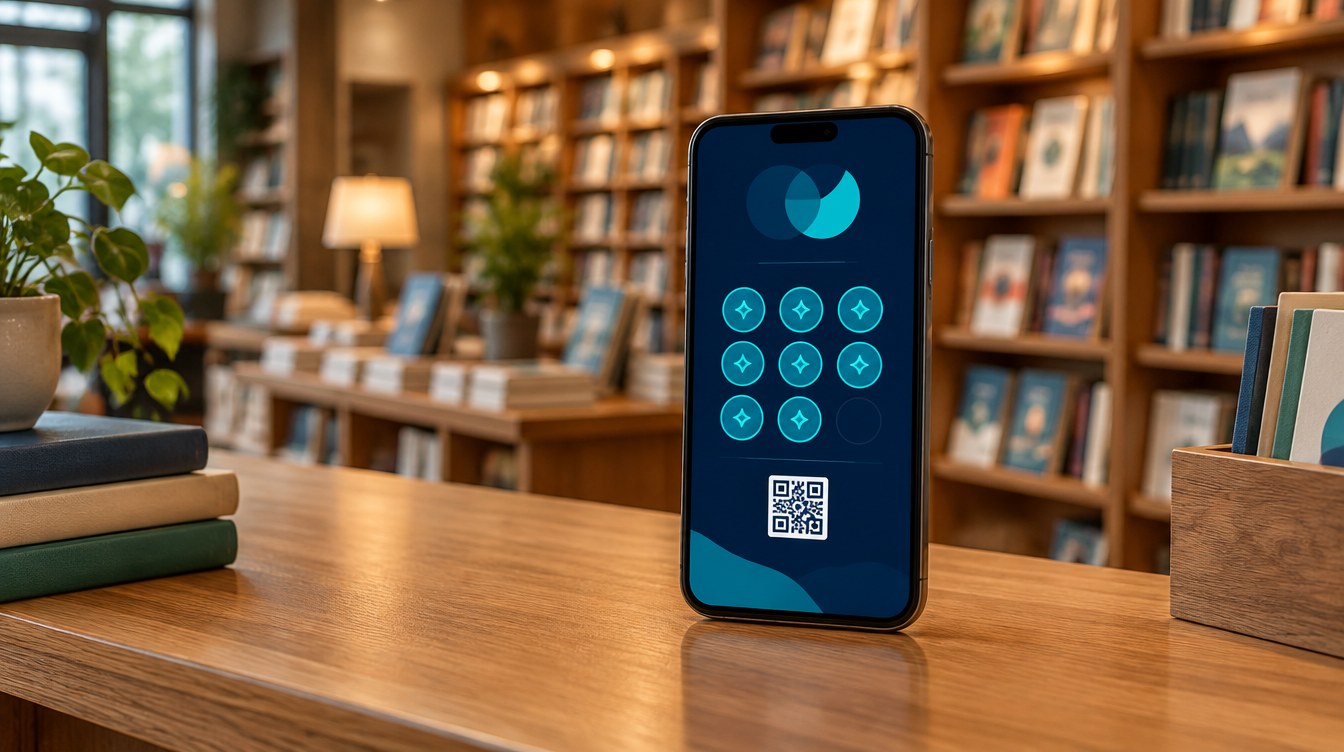
A bookshop has the most naturally loyal customer in retail. A real reader buys a book a month — sometimes a week — and keeps doing it for decades. No perfume habit, no sneaker habit, no gadget cycle comes close to that rhythm. And yet in most UAE bookshops, that customer pays cash or taps a card, takes the tote bag, and leaves as anonymous as a tourist buying a bookmark. A bookstore loyalty program exists to fix exactly that: the person who visits twelve times a year should not be a stranger on visit thirteen.
The Shop Knows the Books. It Doesn't Know the Readers.
Ask any bookseller about their stock and you'll get shelf-by-shelf detail. Ask them to message every customer who bought a novel in the last six months, and there's silence. The knowledge in a good bookshop flows one way — staff know the books, the books never say who bought them. Meanwhile the online stores that undercut every UAE bookshop on price know precisely what each reader bought, when, and what to recommend next. The neighbourhood shop offers better curation, real browsing, and a human who has actually read the thing — and then loses the follow-up entirely.
That follow-up is the whole game, because book buying is chronically postponable. Nobody needs a novel today. The reader who loved their last purchase fully intends to come back, then three months pass. Nothing reminded them. The shop had no way to.
What a Bookstore Loyalty Program Looks Like in a Wallet
The fix is not a plastic card that lives in a drawer, and it's certainly not an app — nobody downloads an app for a shop, not even a shop they love. The fix is a loyalty card that lives in Apple Wallet or Google Wallet, the app every customer already carries.
Joining takes one scan. A QR code stands by the till — or better, on the shelf-talkers in the bestseller section. While the purchase is being bagged, the customer scans it, taps "Add to Wallet," and your card is on their phone. No form, no password, no app store. The queue doesn't slow down.
Every book stamps the card. A classic digital stamp card fits bookselling perfectly: buy nine books, the tenth is on the house. For a reader on a book-a-month habit, that's a free book a year — cheap for the shop, genuinely felt by the customer, and a quiet reason to buy here instead of online when the price difference is a few dirhams. If your shop leans on big-ticket items — box sets, art books, the September textbook rush — run points on the full bill instead, so a AED 400 school-list order counts for what it is.
The kids' section gets its own card. A children's reading stamp card — every book stamps, ten stamps earns a prize — turns the weekly parent visit into a ritual the child drives. Parents will detour across town for the shop where their kid is four stamps from a badge. It's the closest thing retail has to a school reading challenge, and it runs itself at the till.
A Free Channel to People Who Actually Read
Here's what makes the wallet card more than a discount scheme. Every member's lock screen becomes a channel you own — wallet push notifications are free, unlimited, and land on the phone without fighting an inbox or an algorithm. For a bookshop, the messages write themselves: "Signed copies of the new release arrive Thursday." "Author reading Saturday at 7." "The new term's school lists are in stock." Instagram shows that post to whoever the algorithm chooses; the lock screen shows it to every reader who chose you.
The back of the pass does quiet work too: your WhatsApp line for reservations and special orders — "can you hold one for me?" is half of bookshop customer service — plus the location pin, opening hours, and the join link. When a member recommends your shop in a book-club group chat, the recommendation carries the card with it, the same way a referral program should.
Book Fair Season Is Coming for Your Customers
There's a UAE-specific reason to set this up now. From late October through November, fair season — with the Sharjah International Book Fair at its centre, one of the biggest book events in the world — absorbs an astonishing share of the country's annual book budget in a couple of weeks. Every bookshop feels those weeks: the regulars come back with their year's reading already bought.
A member list doesn't cancel the fair, but it changes what happens around it. Before: "Make your fair wishlist in the shop — anything we stock is 15% off for members this week." After: "Fair over? We're taking special orders for everything that sold out — reply on WhatsApp." The shops with no channel just watch November happen to them. The shop with five hundred readers on its card gets to talk back. It's the same logic every retail business faces in promo season — the audience you can reach for free is the one that keeps you off the discount treadmill.
An Evening of Setup, a Decade of Repeat Visits
Getting a bookstore loyalty program live is an evening of work, not an IT project. Design the card in your shop's branding, pick the reward shape — nine stamps and a free book is the proven pattern — print the QR for the till and the shelves, and brief the staff on one sentence: "Scan this and your books start counting." From then on it runs itself: joins at the counter, stamps at the scan, a kids' card that brings families back weekly, and a lock screen that fills the shop for the next author night.
The reader who buys a book a month is already the best customer in retail. It's time the shop knew their name.
Book a short demo with Wally and see your own bookshop's card in Apple Wallet and Google Wallet before fair season opens.