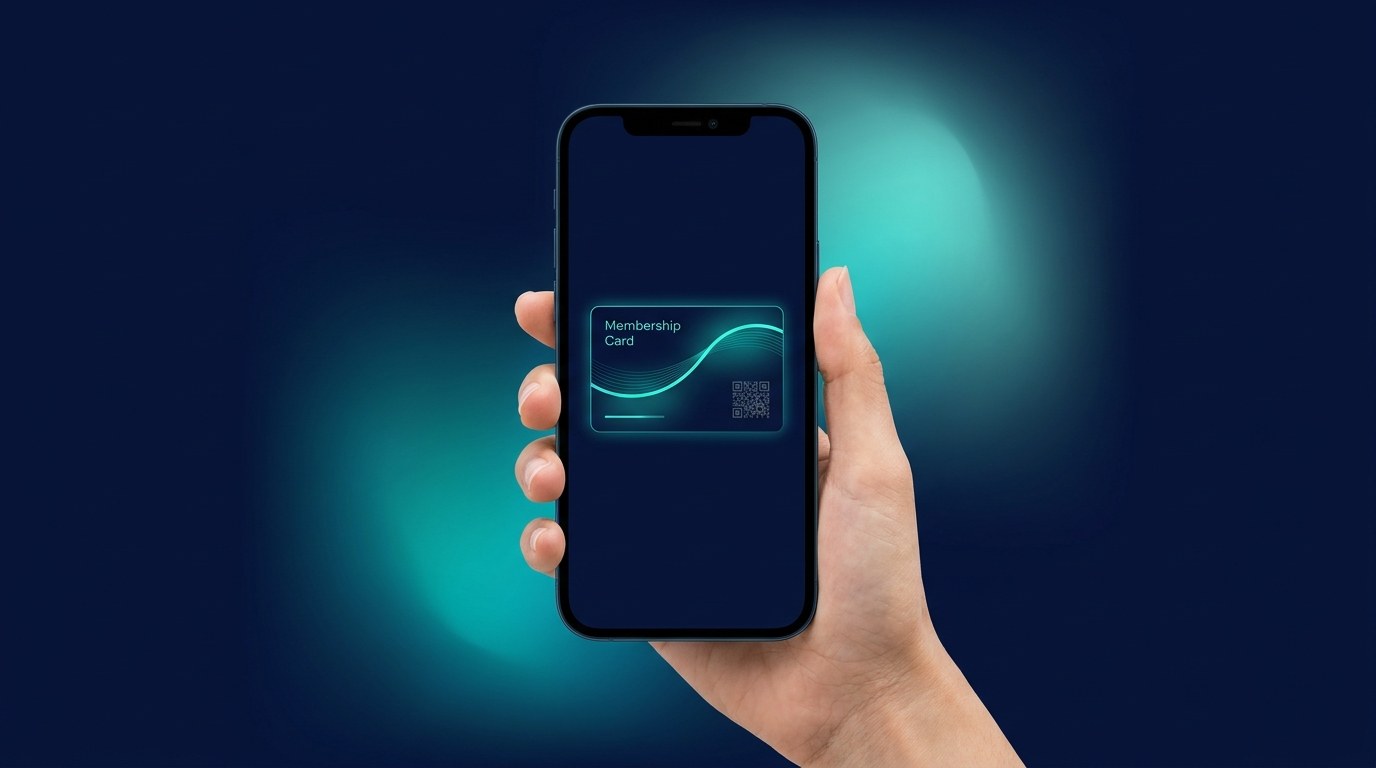
A digital membership card is exactly what it sounds like: your member's card, on their phone, in the wallet app they already use for boarding passes and payments. No plastic to print, no PDF to dig out of an inbox, no app to download. But "digital" covers a lot of ground — and most of it doesn't work. Gyms email PDF cards nobody can find at the door. Clubs build apps nobody installs. Studios keep laminated cards that say nothing and expire silently. If you run a gym, a padel club, a coworking space, or a members' lounge in the UAE, the format you choose decides whether check-in is smooth, whether renewals happen on time, and whether the card does any work between visits. Here's the honest comparison.
The Four Formats of a Digital Membership Card (and Where Each One Breaks)
Every membership card your members might carry falls into one of four buckets:
- Plastic. The default for decades — and the most expensive way to say the least. Printing and reprinting costs real money, the card can't show an expiry date that updates, and when a member forgets it (they will), the front desk starts a name-lookup queue. Worst of all, plastic is silent: it can't remind anyone to renew.
- PDF or emailed card. Free to send, impossible to find. Six weeks after joining, the card lives on page four of a search for your club's name. Members screenshot it, the barcode blurs, and check-in becomes "just let me find it… one second."
- Your own app. The card is always up to date — for the members who install the app. Most won't. People download apps for maybe the top two or three brands in their life, and a place they visit twice a week still doesn't make the cut. You pay app-store development prices for a channel most members never open.
- Apple Wallet & Google Wallet pass. The card sits in the wallet app that ships on every phone — same place as flight tickets and bank cards. It's always one swipe away at the door, it updates itself when the membership changes, and it can put a message on the lock screen when renewal is due. This is the format the rest of this guide is about.
What a Wallet-Based Digital Membership Card Actually Does
The card itself is a pass file — the same technology behind airline boarding passes (here's the plain-English explainer). For a membership business, that translates into four practical wins:
- Members join in one scan. A QR code at reception, on the signup form, or in the welcome email. The member scans it, taps once, and the card is in their wallet before they leave the desk. No form re-typing, no plastic to hand over next visit.
- Check-in takes two seconds. Member walks in, phone comes out — the card even surfaces automatically when they arrive, if you enable location — staff scan it, done. The queue at 6 PM moves like it should.
- The card updates itself. Tier upgrade, new expiry date, class credits remaining, freeze status — you change it once in the dashboard and every card in every pocket is correct within moments. Nobody is carrying stale plastic.
- Renewal reminders reach the lock screen. This is the part no other format can copy. Ten days before expiry, the card itself nudges the member — no SMS costs, no email lost in promotions. Renewals stop depending on an awkward conversation at the front desk. (We wrote more about why check-in and renewal are the two moments that decide a membership business.)
Who It's For: Gyms, Clubs, Studios, Coworking, Lounges
The pattern fits any business where people pay to belong rather than pay per visit:
- Gyms and fitness studios use it for tiered memberships and class-pack credits that count down on the card itself — the member always knows how many sessions are left, and so do you.
- Padel and sports clubs pair the membership card with booking perks — priority slots, guest passes, member pricing — all visible on the pass.
- Wellness clubs and spas run monthly memberships alongside stamp cards on the same rails; the wellness playbook is one of the most natural fits.
- Coworking spaces and members' lounges use the card for door recognition and tier display — day-pass, resident, founder — without printing a badge for every plan change.
In every case the economics are the same: the money is in the renewal, not the signup. A card that stays visible, stays correct, and speaks up at renewal time protects the revenue you already earned.
Launching One Takes an Afternoon, Not a Project
This is the part that surprises most owners. With Wally's digital membership cards, the setup is: design the card in the dashboard (your logo, your colors, the fields you want on it), generate the QR code, and put it where members join. Existing members scan the same code — no data migration drama, no "everyone must re-register." From that point, every new member gets the card in one scan, and your dashboard shows who's active, who's overdue, and who's about to lapse. Plastic never told you any of that.
The Takeaway
A digital membership card only earns the name if members can actually find it — and the only place they reliably find anything is the wallet app on their phone. Plastic costs money and says nothing. PDFs get lost. Apps don't get installed. A card in Apple Wallet and Google Wallet is always at the door when the member is, updates itself when the membership changes, and quietly handles the renewal conversation before it becomes awkward.
Want to see your club's card on your own phone in the next ten minutes? Book a quick demo with Wally — one scan and you're holding it.