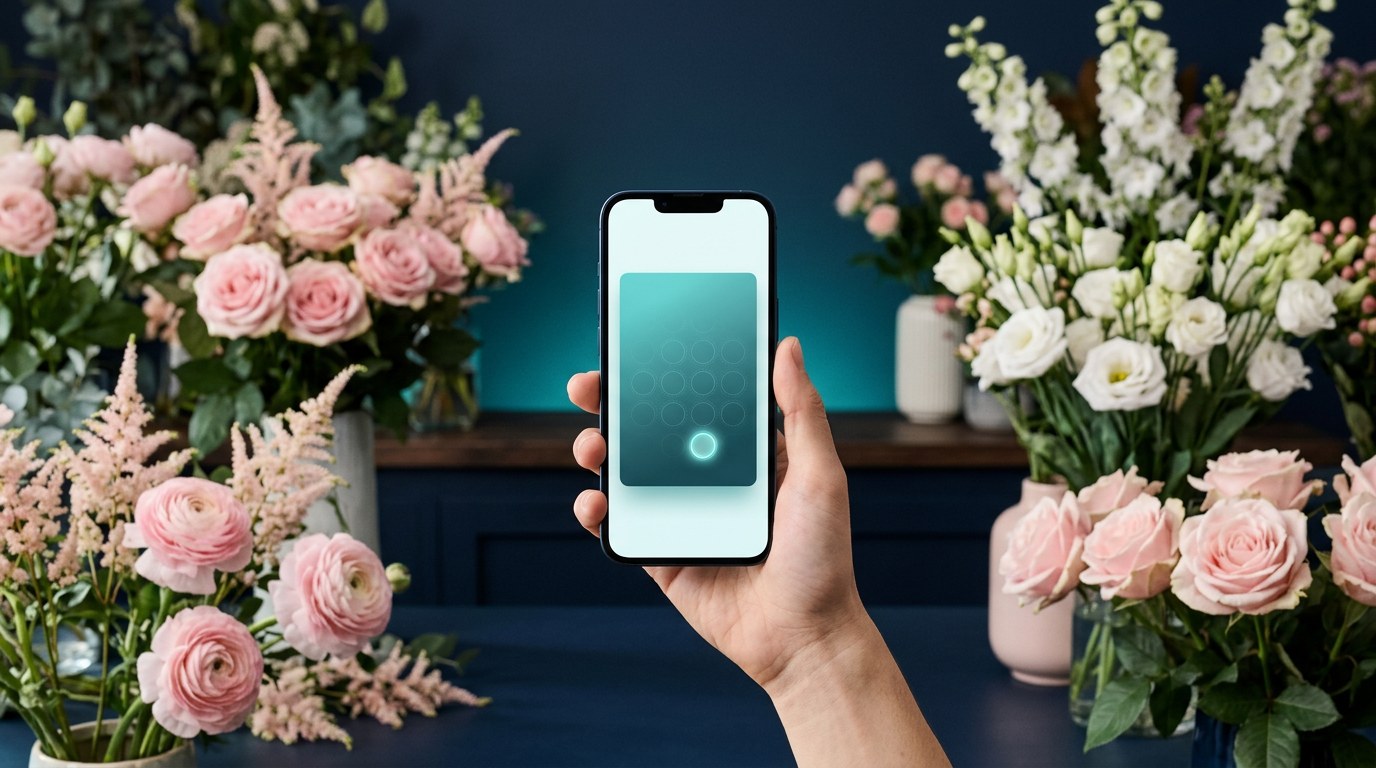
A flower shop's best customers are the most predictable buyers in retail — and the easiest to lose. The anniversary customer buys the same week every year. The birthday customer buys the same date every year. Valentine's Day and Mother's Day are literally on the calendar. Yet most florists treat every sale as a walk-in, and the customer who bought a beautiful bouquet in March is a stranger again by next March. A flower shop loyalty program that lives in Apple Wallet or Google Wallet fixes the real problem: not getting customers to love your flowers — they already do — but being the shop they remember when the next occasion comes around.
No app to download, no signup form. The customer scans a QR code while the bouquet is being wrapped, taps "Add to Wallet," and your shop has a permanent card on their phone.
Why a Flower Shop Loyalty Program Fails on Paper
Paper stamp cards work when visits are days apart — a coffee shop can get away with them because the card gets used before it gets lost. Flowers are different. The gap between purchases is measured in months, and no paper card survives months in a wallet, a car door, or a kitchen drawer. By the time the next anniversary arrives, the card is gone and the stamps with it.
The deeper problem is that the paper card is silent. It can't remind anyone of anything. And reminding is the whole game in flowers: the customer who forgets the anniversary until the last minute buys from whoever is nearest — the petrol station, the supermarket, the first delivery app result. The florist who reminds them three days early wins the order at full price. A digital stamp card in the wallet does both jobs: it can't be lost, and it can speak up.
The Occasion Reminder Is the Whole Business
Here's the play that pays for the program by itself. When a customer buys for an occasion, note the date — most will happily tell you it's an anniversary when you ask what the flowers are for. Next year, a few days before that date, a short message lands on their lock screen: "An important date is coming up — shall we prepare something beautiful?" It costs nothing to send, it arrives from a card the customer chose to add, and it reads as thoughtful service, not advertising.
Compare that to how the reminder usually happens: it doesn't. The customer remembers late, panics, and buys wherever is fastest. Florists lose their best repeat orders not to better shops but to forgetfulness. Wallet push notifications are the only free channel that reaches the lock screen at exactly the right moment — no SMS fees, no email that opens two days too late.
The same channel handles the calendar peaks. Two weeks before Valentine's Day: "Order early — the good roses go first." Before Mother's Day: "Pre-order for pickup and skip the queue." One message to everyone who ever bought from you, at the exact moment they're about to search for flowers.
Stamps for the Regulars, Perks for the Big Days
Not every flower customer is an occasion buyer. There's the customer who picks up a small bunch every week for the dining table, the office manager who orders reception flowers every Monday, the café owner who wants fresh stems on every table. These regulars deserve the classic loyalty mechanics: buy nine bouquets, the tenth is free. On a wallet card, each purchase adds a stamp with one scan at the till, and the customer watches the free bouquet get closer — progress they can see is progress they finish.
For occasion buyers, straight stamps are too slow — four purchases a year means two years to fill a card. Give them value-based perks instead: a birthday-month discount, a free upgrade to the larger bouquet on their third order, early access to Valentine's pre-orders. The wallet card handles both structures at once, and unlike a printed card, you can adjust the offer any time without reprinting anything.
Own the Customer Before the Apps Do
Delivery apps and flower aggregators are training your customers to search a marketplace instead of remembering a shop. Every order that goes through an app is a commission paid and a customer relationship handed over — the app knows the anniversary date now, and next year it will remind them on behalf of whichever florist pays the most. A wallet card is the counterweight: your brand on their phone, your reminder on their lock screen, your direct order without the middleman. It's the same logic that helps small retailers compete without an app — own the relationship, not just the transaction.
What It Looks Like Day to Day
The setup is one afternoon. Design the card in your colors, print the QR code, put it on the counter and the delivery vans. Staff mention it while wrapping: "Scan this and your next bouquets count toward a free one." Customers join in ten seconds, while they're standing there with time to spare — the wrapping wait is the best signup window in retail.
From then on it runs itself. Stamps happen at the till with a scan. Occasion dates go into the dashboard as customers mention them. Reminders go out automatically before saved dates and seasonal peaks. And when a good customer hasn't been in for a while, a gentle win-back nudge brings the drifted ones back before they're gone for good.
Ready to be the shop they remember before the occasion, not after? Book a quick demo with Wally — your loyalty card goes into Apple Wallet and Google Wallet, customers join in one scan at the counter, and occasion reminders land on the lock screen right when the next bouquet is about to be bought.