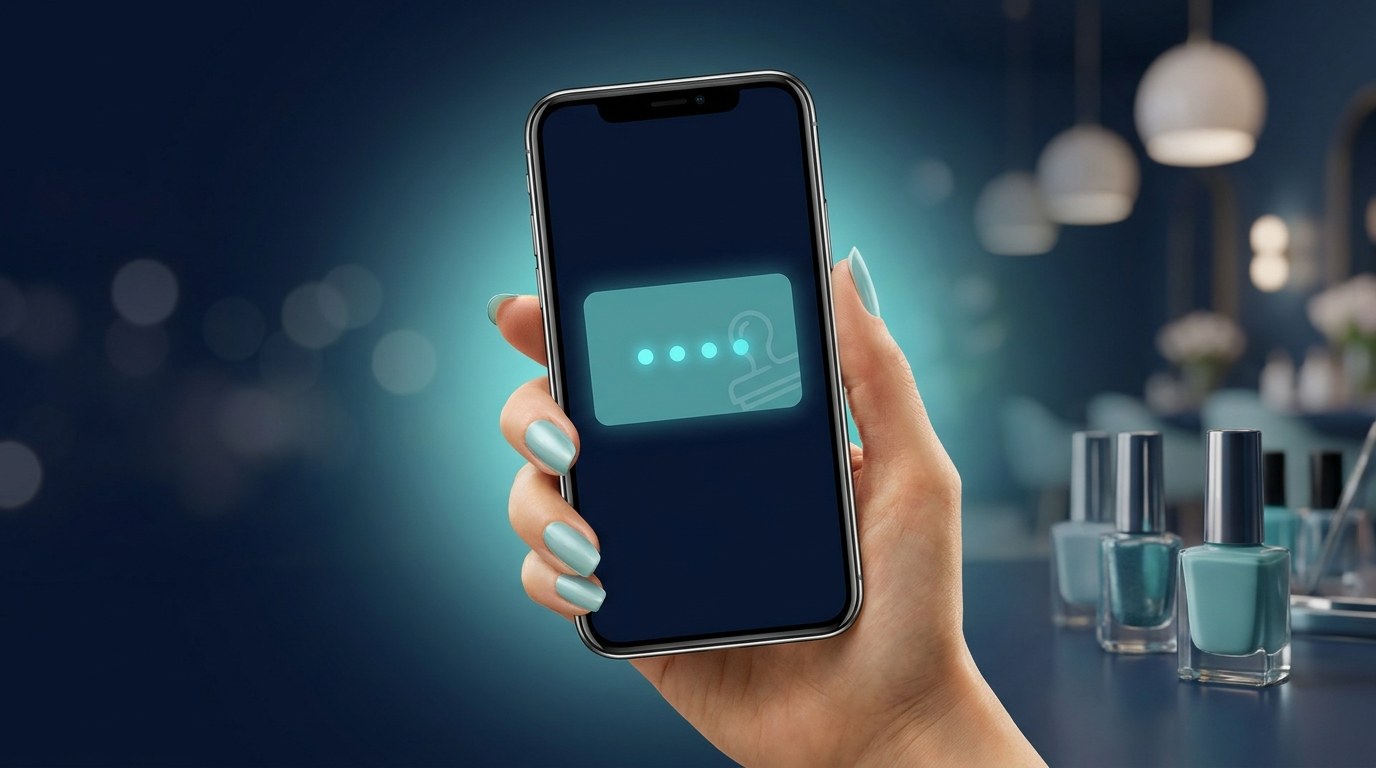
A nail salon loyalty program starts with an advantage most businesses would pay dearly for: your product expires on a schedule. A fresh gel set looks flawless for about two weeks. Then the growth line shows, a corner chips at the keyboard, and — like clockwork — your client needs you again. Cafés have to invent reasons for the next visit. You have one growing out on ten fingernails. And yet most nail salons watch clients they've served for a year quietly disappear into whichever salon happened to have a free chair on the wrong afternoon.
That's the paradox of the nail business: the rebooking clock that should guarantee loyalty is exactly what breaks it. Because when a nail chips, it doesn't feel like "time to book my usual salon." It feels like an emergency — and emergencies go to whoever can take them right now.
Why Nail Clients Drift (and It's Almost Never the Quality)
Ask a salon owner why a regular stopped coming and you'll hear guesses about price or a bad set. The real story is usually smaller. The chip happened at work on a Thursday. Your client searched "nails near me," found a walk-in slot two streets from the office, and the new place was… fine. Two weeks later the growth line arrived on schedule, the fine place was already in her recent bookings, and your Thursday regular became someone else's — without ever deciding to leave you.
Paper punch cards can't stop this, because they're never there when it matters. The card is in the other handbag, or under the car park receipts, and after the third "I forgot it, can you stamp it next time?" everyone stops pretending. Meanwhile the one thing that would have held the relationship — a small reason to come back to you, visible at the exact moment she's rebooking — doesn't exist.
A Nail Salon Loyalty Program Built Around the Two-Week Clock
The fix isn't a bigger discount. It's putting the loyalty card where the rebooking decision happens: on your client's phone. Here's the setup that fits how nail appointments actually work.
1. A stamp card that joins in one scan — while the nails dry
Drying time is the best onboarding window in the beauty business: ten captive minutes when your client can't use her hands for much but can absolutely look at a QR code on the mirror. One scan, and your digital stamp card is in her Apple Wallet or Google Wallet. No app to download, no form with wet nails, no plastic to lose. From then on the card is in the phone she checks a hundred times a day — including the moment a nail chips.
2. A reward rhythm that matches real visits
Classic structure works: buy five gel sets, the sixth is free. At a client every two to three weeks, that's a reward every ten to twelve weeks — close enough to feel reachable. Then make the card pull harder with a mini reward in the middle: a free nail art accent or an upgrade to a spa pedicure at stamp three. A card that pays out something small on the way to the big reward gets completed far more often than one that asks for five acts of faith in a row.
3. The day-twelve nudge — beat the chip to it
This is the part paper can never do. Around day twelve — before the emergency, while the set still looks good — the card puts one line on her lock screen: "Fresh set time? You're two stamps from a free mani." Now the rebooking decision happens calmly, in your favour, days before a chip sends her to a search engine. You're not competing with every salon near her office anymore; you're the appointment she already made.
4. Prepaid packages for the every-two-weeks regular
Your steadiest clients will happily buy five sessions upfront if you make it effortless — cash in your till today, five guaranteed visits ahead, and a membership card in her wallet that visibly counts down: 5 left, 4 left, 3. A package client doesn't re-decide where to go every fortnight. She's already yours; the card just keeps score.
What It Looks Like at the Counter
Nothing about your setup changes. A QR code stands at the dryer station and the till. Joining is one scan; stamping takes a second at checkout on whatever phone or tablet you already own — no new hardware, no POS surgery. The same system runs every card a salon issues: stamp cards for gel regulars, packages for the loyal, a VIP card for the client who sends you half her office.
And because every stamp is logged, you finally see what paper hid: who comes every two weeks, who has stretched to five, and who's gone quiet — while a friendly nudge can still bring them back.
The Maths of the Two-Week Client
A client on a two-week cycle is roughly 26 visits a year. Let her drift to a five-week "whenever it chips" pattern and she's ten. Same client, same loyalty in her heart — sixteen visits a year gone, at 150–250 AED a set. Multiply by the handful of regulars every salon loses each quarter to nothing more than a badly timed chip, and the quiet cost dwarfs any reward you'd ever give away. A free sixth manicure is not a discount. It's the cheapest way ever invented to keep the other twenty-five.
Ready to put your loyalty card in every client's wallet before the next chip decides for her? Book a quick demo with Wally — your card goes into Apple Wallet and Google Wallet, clients join in one scan while their nails dry, and the rebooking nudge runs itself.