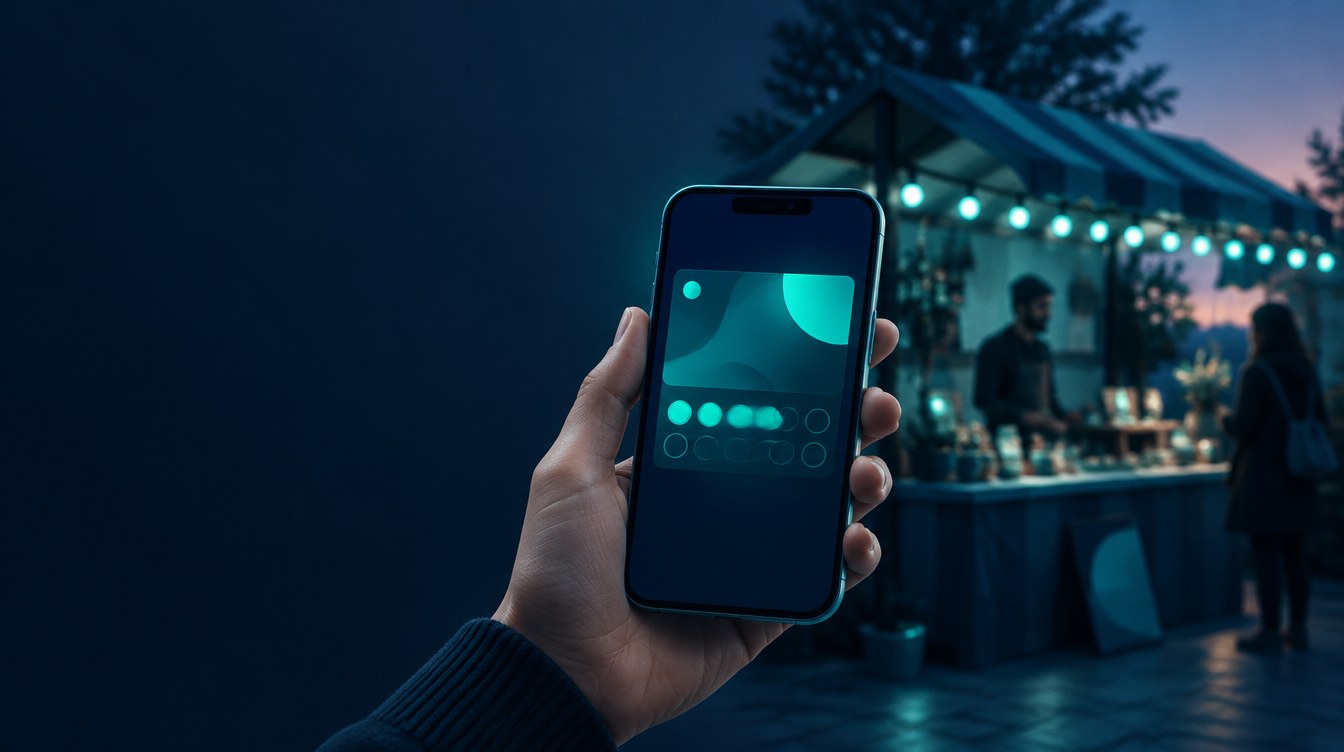
The UAE's market season is back. From late October through spring, weekend markets and pop-ups fill the calendar — artisan markets at the parks, festive fairs, food pop-ups, home-business stalls at community events from Dubai to Abu Dhabi to Sharjah. For a home baker, a candle maker, a specialty coffee cart or a small clothing label, one good weekend can mean hundreds of customers at the table. And that's exactly where most pop-up shop marketing fails: Sunday night the stall comes down, and every one of those customers disappears. They loved your product, they paid, they left — and you have no way to reach a single one of them again.
The Pop-Up Problem: Great Sales, Zero List
A pop-up or market stall is the most expensive customer-acquisition channel a small business will ever run. You pay the stall fee, you prep stock for days, you stand there for twelve hours — and the market delivers what Instagram ads can't: real people tasting, touching and buying your product. Then the weekend ends and the economics quietly collapse. The customer who bought three candles doesn't remember your brand name in December. The family that queued for your brownies can't find you between markets. When you book your next pop-up, the only way to tell anyone is to hope the market's own Instagram account mentions you. You're renting an audience every single weekend and handing it back on Sunday night.
The fix isn't a bigger banner or a better corner. It's one rule: every sale at the stall must buy you a customer, not just a transaction. The businesses that grow out of market season into permanent shops — and we've written about what happens next in our grand opening marketing guide — are the ones that treat each pop-up as list-building first and revenue second.
One QR Code Turns a Stall Into a Customer List
Here's what that looks like in practice. You put one QR code stand on your table. When a customer pays, they scan it, and your loyalty card lands in their Apple Wallet or Google Wallet in about fifteen seconds — next to their bank cards, where it stays long after the market closes. No app to download (nobody downloads an app for a brownie stall), no form to fill in while a queue builds behind them. One scan, done. It's the same digital stamp card a café uses, except your "branches" are wherever your table happens to be this weekend.
To make the scan irresistible, attach it to the sale that's already happening: "Scan this and your first stamp is loaded — five stamps gets a free box." Or make it the mechanic of your market offer: the bundle discount applies when they join. Either way, the customer walks away with your brand sitting on their phone, and you walk away with what no stall fee ever bought you — a direct, free channel to a person who has already paid you once.
Between Markets Is Where the Money Is
A wallet pass isn't a static card — it's a push channel. Every pass you issue can receive free lock-screen notifications, and for a pop-up business those messages do the work a shopfront would: "We're at the Ripe-style Saturday market this weekend, stall 14" lands on the lock screen of everyone who ever bought from you. Taking pre-orders for Eid or the festive season? One push. Launched a new flavour or a delivery option? One push. Compare that with the alternatives: SMS costs 10–30 fils per message with sender-ID paperwork, and an Instagram post reaches whatever slice of your followers the algorithm feels like that day. The wallet push is free, unlimited, and goes to every single customer — because every single one of them scanned at your table.
Stamps keep the list warm, too. A customer three stamps into a card has a reason to find your stall again instead of impulse-buying from whichever vendor is nearest. And because stamps are logged digitally, you finally see the numbers a cash box hides: how many customers came back for a second market, who your ten best regulars are, which weekend produced buyers rather than browsers. That's the start of a real customer database — built at a folding table.
The Season Playbook
If you're booking stalls for this season, set this up before your first weekend:
1. Create the card before the market. One loyalty or stamp card, your logo and colours on the face of the pass. Print one A5 QR stand. That's the entire kit — it fits in the same box as your packaging.
2. Make scanning part of payment. The moment the customer taps their card to pay is the moment their phone is already out. One line from you — "scan here, first stamp's on me" — converts most buyers on the spot.
3. Push before every market, not after. A Thursday notification telling your members where you'll be on Saturday fills the stall with people who came for you, not foot traffic that happens upon you.
4. Collect the season, then cash it in. By spring you'll have hundreds of proven buyers on your list. That list is what makes the next step — a permanent kiosk, a retail space, a delivery menu — a calculated move instead of a leap of faith.
Own the Audience You Already Paid For
Every stall fee you pay this season buys you a weekend in front of buyers. Whether those buyers are gone by Monday or on your list for years comes down to one QR stand on your table. With Wally, you can design your card tonight and be collecting customers at your next market — no app, no hardware, one scan. Book a short demo and we'll have your pop-up's wallet card ready before the weekend.