Every business already has a tiered loyalty program — it just isn't written down. There's the regular whose order is started before they reach the counter, the client who gets squeezed in on a full day, the guest who always gets the good table. Staff know exactly who the top customers are, and quietly treat them better. The problem is that the customer can't see any of it. Status that isn't visible doesn't change behavior — and the whole point of tiers is that they do.
What a Tiered Loyalty Program Actually Does
A tiered loyalty program ranks members into levels — usually three, something like Bronze, Silver, Gold — based on how often they visit or how much they spend. Each level unlocks better perks: earn points faster, priority booking, member pricing, a better birthday gift. Simple on paper. But the mechanics hide two powerful effects.
The first is the climb. A customer two visits away from Silver behaves differently than a customer with a generic card. The next level is a finish line, and people close gaps they can see. The second is stronger: once a customer reaches Gold, they'll change their behavior to keep it. Airlines built empires on this — people book worse flights at worse times to protect a status level. Losing a level you hold hurts more than missing one you never had, and that's exactly the force that keeps your best customer from trying the new place across the road.
Why Tiers Beat a Flat Program for Your Best Customers
In most small businesses, the top slice of customers drives the majority of revenue. A flat program treats that slice the same as everyone else: the customer spending AED 800 a month earns the same "10th coffee free" as the tourist who came twice. That's backwards — your heaviest spenders get the weakest deal relative to what they give you.
Tiers fix the math. The casual visitor gets a reason to come more often (reach Silver), and the regular gets recognized for what they already do (hold Gold, and get treated like it). Nobody is overpaid: the best perks go only to the people whose behavior already earned them. That's also why tiers pair so well with points rather than stamps — points measure spend, and spend is what separates a Gold customer from a Bronze one. Frequency businesses with one product — a karak counter, a juice window — are usually better off with a simple digital stamp card. Tiers earn their keep where tickets vary: salons, restaurants, gyms, clinics, retail.
Invisible Status Is No Status
Here's where most tiered programs die: the tier lives in the POS. The customer is technically Gold, but the only person who can see it is the cashier — sometimes. There's no card that looks different, no moment of reaching the next level, no status to protect. A tier nobody can see motivates nobody.
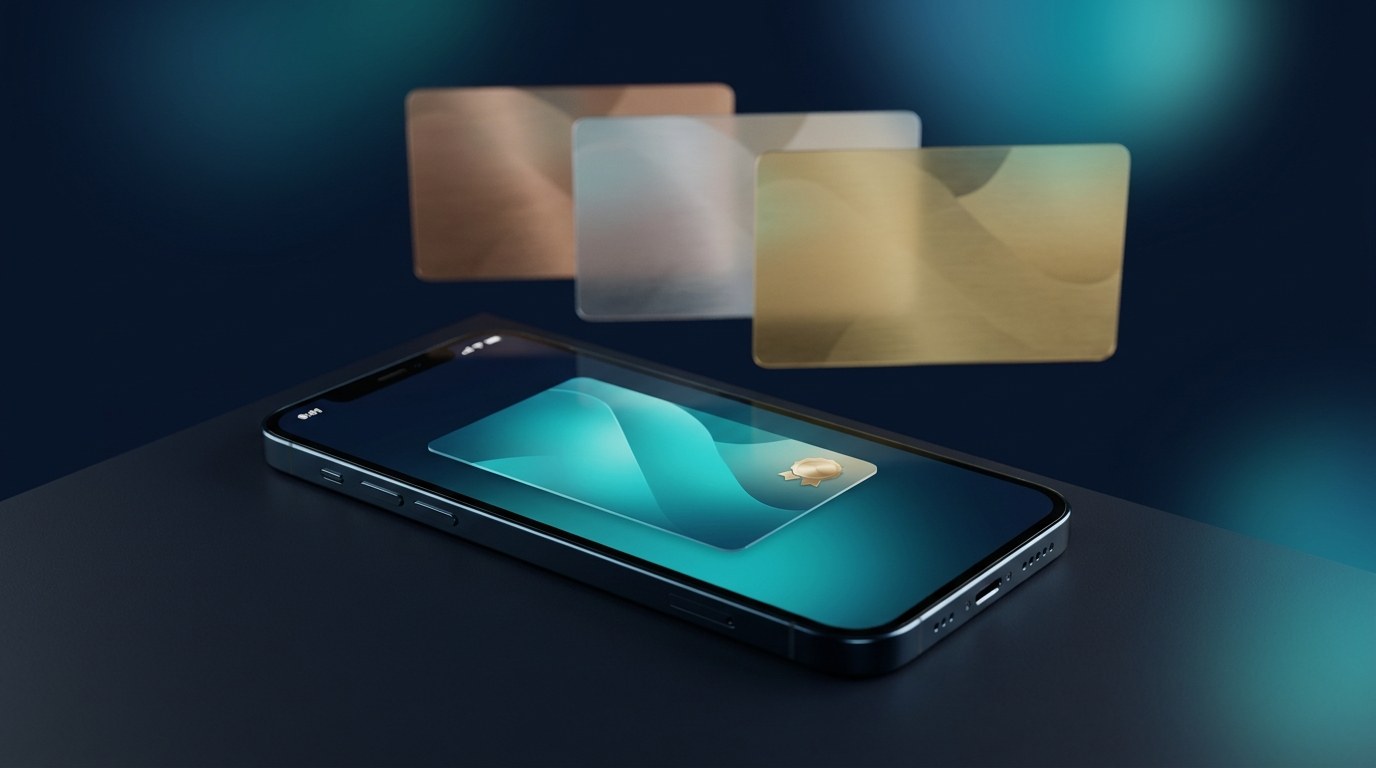
This is what changes when the program lives in Apple Wallet and Google Wallet. The tier is printed on the face of the pass — a Gold member carries a visibly gold card on their phone. When they level up, the card redraws itself on its own and a message lands on their lock screen: "You've reached Gold." No reprinted plastic, no email nobody opens, no app to download. Joining takes one scan of a QR code at the counter, and from then on the pass quietly does the psychology for you: it shows progress toward the next level, celebrates the upgrade, and sits between their bank cards looking like something worth keeping.
How to Design Tiers That Work
Keep it to three levels. Five tiers is a spreadsheet, not a status game. Entry, middle, top — that's enough for a climb and a crown.
Make the first jump easy. Silver should be reachable in a normal month for a decent customer — three or four visits, a modest spend. An early win pulls people into the game; a distant one convinces them not to play.
Make the top feel different. Gold has to mean something beyond a bigger discount: priority booking on the day everyone wants, a standing member price, first access to new products, double points during their birthday week. The best top-tier perks cost you little and feel like recognition, not markdown — the same logic that makes loyalty stronger than discounts in the first place.
Name the tiers like you mean it. Bronze–Silver–Gold works everywhere, but the programs people talk about localize the top: Regular, VIP, Family. A salon's top tier called "Front Row" says more than "Level 3" ever will.
Review levels gently. If status can expire, warn people from the lock screen before it does — "two visits keep your Gold this quarter" is one of the most effective messages a business can send, and on a wallet pass it costs nothing.
Where Tiers Fit Best
For a salon, tiers separate the six-week color client from the once-a-year walk-in — and give her a reason to book the add-on treatment with you instead of splitting visits across town. For a restaurant, a visible member tier turns the weekly table into an ambassador who brings guests to "their" place. Gyms and studios use tiers to reward the members who show up — the ones who renew. Retail uses them to concentrate spend that would otherwise scatter across three shops. In every case the machinery is the same: a membership card in the customer's wallet that shows their level, updates itself, and messages them free of charge.
Start With the Status You're Already Giving Away
You don't need to invent perks — you're already giving your best customers special treatment informally. A tiered loyalty program just makes it official, visible, and slightly out of reach of everyone who hasn't earned it yet. That visibility is what turns good treatment into retention.
With Wally, you can set up a tiered card for Apple Wallet and Google Wallet in an afternoon: define three levels, set the thresholds, and let the pass handle the upgrades, the lock-screen congratulations, and the renewals. Book a quick demo and see what your Gold card would look like on a customer's phone.