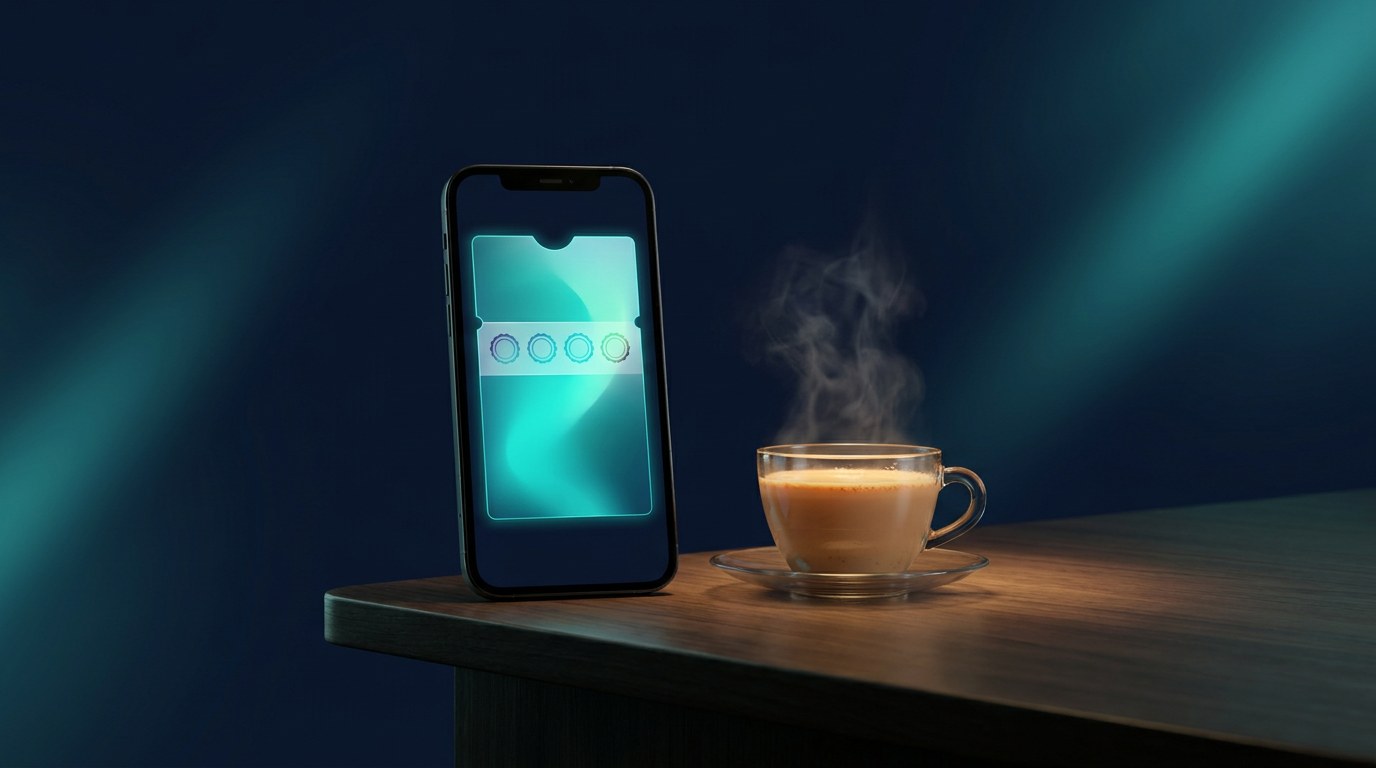
The UAE cafeteria might be the highest-frequency food business in the world. A karak regular doesn't visit once a week — he's at your window twice a day, every day, sometimes without leaving his car. Multiply that by the office crowd ordering chapatis at ten, the evening shawarma rush, and the delivery calls, and a busy cafeteria serves the same faces hundreds of times a year. Yet almost every one of those customers is anonymous: no name, no number, no way to reach them if they switch to the cafeteria that opened one street over. A cafeteria loyalty program that lives in Apple Wallet and Google Wallet changes that in one scan — every karak counts toward a free one, every regular becomes someone you can actually reach, and it costs less per month than a single tray of sandwiches.
Everyone Is a Regular. Nobody Is Known.
That's the strange math of the cafeteria business. A coffee chain would celebrate a customer who visits 400 times a year; for a karak spot near a labour accommodation, an office block, or a taxi rank, that customer is just Tuesday. But frequency built on habit alone is fragile. Your regulars aren't loyal to you — they're loyal to the routine, and routines move: a new cafeteria opens closer to the site, the office relocates, Ramadan resets everyone's schedule, and a customer you served twice a day simply stops appearing. You don't notice for weeks, because you never knew who he was.
The tools other food businesses use don't fit here. Nobody prints loyalty apps for AED 1.5 karak — customers won't download an app for a sandwich shop, let alone a tea window. Paper punch cards die in work trousers and glove boxes. And the delivery platforms that bring you orders keep the customer's name and number for themselves, then charge you commission to talk to him. The neighborhood supermarket fights the same fight — high frequency, thin margins, and platforms in the middle.
What a Cafeteria Loyalty Program Looks Like in the Wallet
A wallet pass is a loyalty card that sits inside Apple Wallet on iPhone and Google Wallet on Android. There's no app to install and no form to fill: you print one QR code and tape it to the window, the counter, or the dashboard-side of the drive-up lane. The customer scans it while the karak is being poured, and the card is on his phone before the change hits his hand. From then on:
Every karak stamps the card. A daily habit deserves a longer card — ten stamps, free karak at the end — and because the pass shows live progress ("7 of 10") every time the phone lights up, the customer has a visible reason to drive past the new place and come back to yours. Wally's digital stamp cards handle the counting; your team just scans.
Meals earn points. Karak builds the habit, but the money is in the breakfast run, the shawarma platters, and the office orders. Let the bigger tickets earn points toward a free meal, and the same pass covers both sides of your business — the AED 1.5 visit and the AED 50 one.
The phone-order crowd counts too. Half a cafeteria's volume never touches the counter — it's WhatsApp messages and phone calls from the same offices every day. Stamp those orders when the driver hands them over, and your best customers stop being a number in a delivery app's database and start being yours.
The Lock Screen Beats the Banner Outside
Here's what paper never did: a wallet pass can send free messages straight to the lock screen of everyone carrying your card. No SMS bundle, no ad budget, no platform commission — and for a cafeteria, the timing writes itself. The 4pm lull: "Karak + samosa combo until 6." A cold January morning: "Hot chai ready — your card is 2 stamps from free." A regular who hasn't scanned in ten days: "We miss you — your next karak stamps double." These land on people who already chose to join, at the exact moment a tea decision gets made. It's the difference between hoping the regulars remember you and reminding them for free.
And because the pass is digital, it scales the way cafeterias actually grow: the same card works across your second and third branches, stamps stay synced, and the customer who moves across town stays your customer. Food businesses on Wally run exactly this playbook — one pass, every branch, every channel.
Built for AED 1.5 Margins
A loyalty program for a cafeteria has to be nearly free to run, or the economics collapse. That's the quiet advantage of wallet passes: no plastic to print, no app to maintain, no per-message SMS cost, no percentage taken from the order. One QR code, a pass in your colors, and a counter team whose entire script is "scan this — this karak counts toward a free one." Most cafeterias go live the same day, and the first free karak gets claimed within the first couple of weeks — by a customer who now has your card next to his boarding passes and bank cards, and a reason to keep it there.
The cafeteria that wins the street isn't the one with the newest signboard. It's the one the regulars can see progress at — seven stamps in, with a hot-combo message landing right as the afternoon slows down. Ready to know your regulars by more than their order? Book a quick demo with Wally — stamps, points, and free lock-screen messages on one pass in Apple Wallet and Google Wallet, joined in one scan at your window.