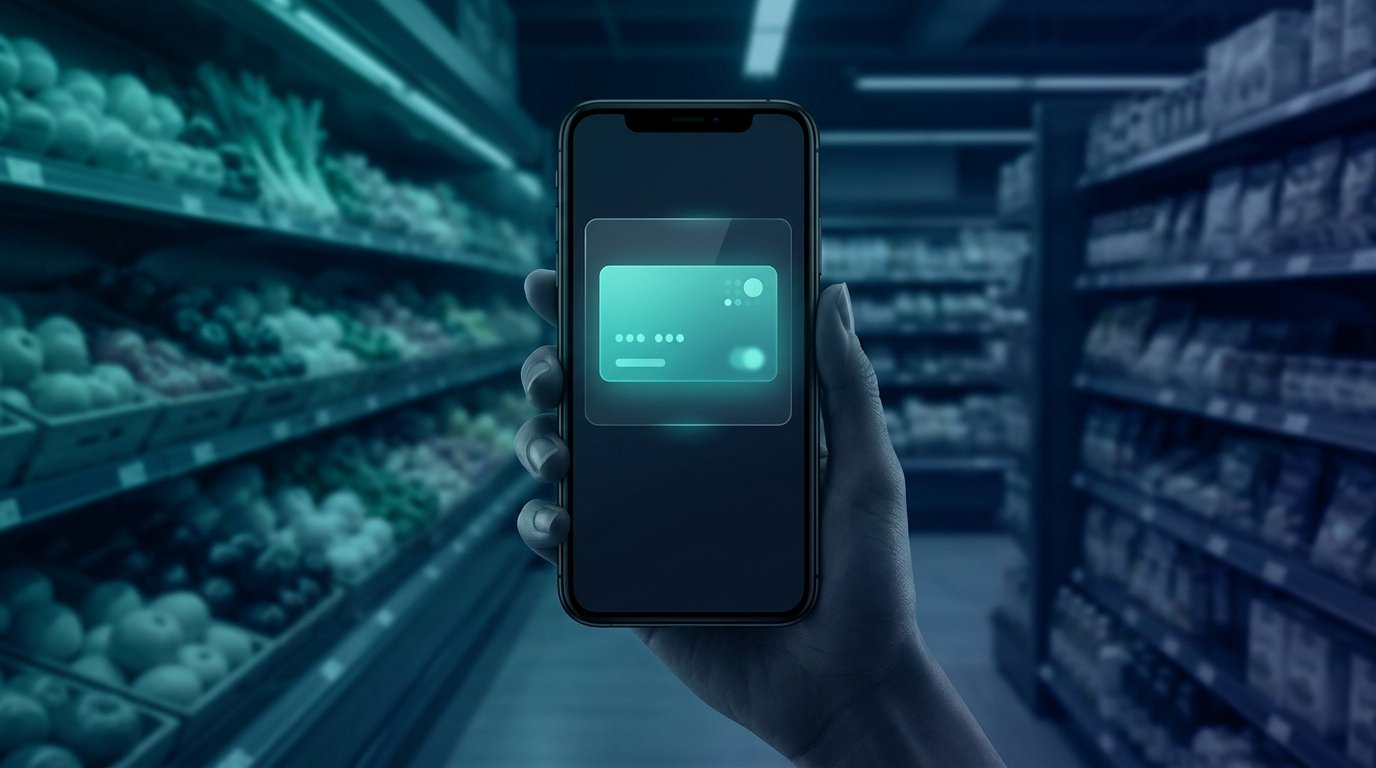
No business sees its customers more often than a supermarket. A family shops for groceries two, three, four times a week — more visits in a month than a salon sees in a year. And yet the neighborhood supermarket is usually the least equipped business on the street to hold onto those visits: the hypermarkets run points apps with full-time teams behind them, the delivery platforms own the customer's phone and take a commission on every basket, and the store around the corner — the one that's actually closest, fastest, and knows its regulars by name — has no loyalty system at all. A supermarket loyalty program that lives in Apple Wallet and Google Wallet changes that in an afternoon: customers join in one scan at the till, every basket earns visible progress, and your store gets a free, direct line to the lock screen of every regular you have.
The Corner Store's Real Competition Is an App
Ask a UAE grocer where the customers went and the answer is rarely "another supermarket." It's an app. The delivery platforms made ordering effortless — and in the process they put themselves between you and your own customers. The platform holds the customer's history, the platform sends the notifications, the platform decides which store appears first, and the platform charges you for the privilege. Meanwhile the hypermarkets fight back with loyalty apps of their own, turning every dirham spent into points and every point into a reason to drive past your store.
What the neighborhood store still owns is everything the apps can't copy: distance, speed, and familiarity. You're two minutes away. There's no delivery fee and no thirty-minute wait. The trouble is that convenience alone doesn't build a habit anyone can see — nothing accumulates, nothing is owed, nothing pulls the customer back when the app sends its next voucher. That's the gap a loyalty card closes.
What a Supermarket Loyalty Program Looks Like in the Wallet
A wallet pass is a card inside Apple Wallet on iPhone and Google Wallet on Android — no app to download, no signup form, no password. That matters more in grocery than anywhere else, because nobody downloads an app for the corner store. One QR code at the till, one scan, and the card is on the customer's phone for good. On that single pass:
Points per basket. Grocery baskets vary too much for a classic stamp card — a AED 12 top-up shop and a AED 400 weekly run shouldn't earn the same. Points per dirham fit better: spend adds up automatically, and at a threshold the customer unlocks money off the next shop or a free staple like eggs, bread, or water. (If your store leans on a fixed habit — the daily bread-and-milk run — a simple stamp card can work too; the mechanic should match the shopping pattern.)
The balance, always visible. The customer sees their points every time they open their wallet — next to their bank cards, not buried in an app they opened once. A visible balance is a quiet argument for choosing your store again, made twenty times a week without you spending a dirham.
Phone and WhatsApp orders included. Most neighborhood stores already deliver the old way — a call or a WhatsApp message, a kid on a bike, cash or card at the door. Those orders can earn points exactly like walk-ins: scan the customer's pass on delivery or add the points from the dashboard. Now your own delivery, the thing the platforms charge you commission to replace, comes with a reward the platforms can't match.
The Lock-Screen Message the Platforms Charge For
Here's the part that changes the economics. A wallet pass can send free lock-screen messages to everyone holding your card — no per-message cost, no ad budget, no platform taking a cut. For a supermarket, the calendar writes itself: "Fresh vegetables just arrived" on delivery morning. "Weekend meat and produce offers — today and tomorrow" on Thursday afternoon. "Ramadan essentials in stock, members get early pickup" ahead of the season. Each message lands on the phone of someone who already shops with you and lives five minutes away — which is exactly why it outperforms a delivery app's push about a store that pays for placement.
Compare the alternatives honestly: SMS costs per message and feels like spam, a printed flyer dies at the door, and a social post reaches strangers before it reaches your regulars. The pass reaches only the people who chose to carry your card.
You See What the Hypermarkets See
The loyalty schemes at the big chains aren't really about points — they're about knowing the customer. A wallet card gives the neighborhood store the same view at one percent of the effort: how many members you have, who shops weekly, whose visits are slipping, and what happened after each message you sent. When a family that shopped every week goes quiet for three, you'll actually know — and one free "we miss you, 50 bonus points this week" nudge costs nothing to send. That's the same retention logic that powers every strong retail loyalty program, applied to the highest-frequency retail there is. It's how the retailers Wally works with stay in the fight against competitors many times their size.
Setup Fits Between the Morning and Evening Rush
Design the card in your store's colors, print one QR code for the till, and brief the cashiers: offer the card while scanning the basket, add the points at every sale. No new hardware, no POS integration required, no developer on the payroll. Most stores go live the same day.
The supermarkets that keep their customers in the delivery-app era aren't the biggest or the cheapest. They're the ones whose card is already on the customer's phone — with points half-earned and a fresh-produce message on the lock screen — when the family decides where this week's groceries come from. Ready to be that store? Book a quick demo with Wally — points, stamps, and free lock-screen messages on one pass in Apple Wallet and Google Wallet, joined in one scan at your till.