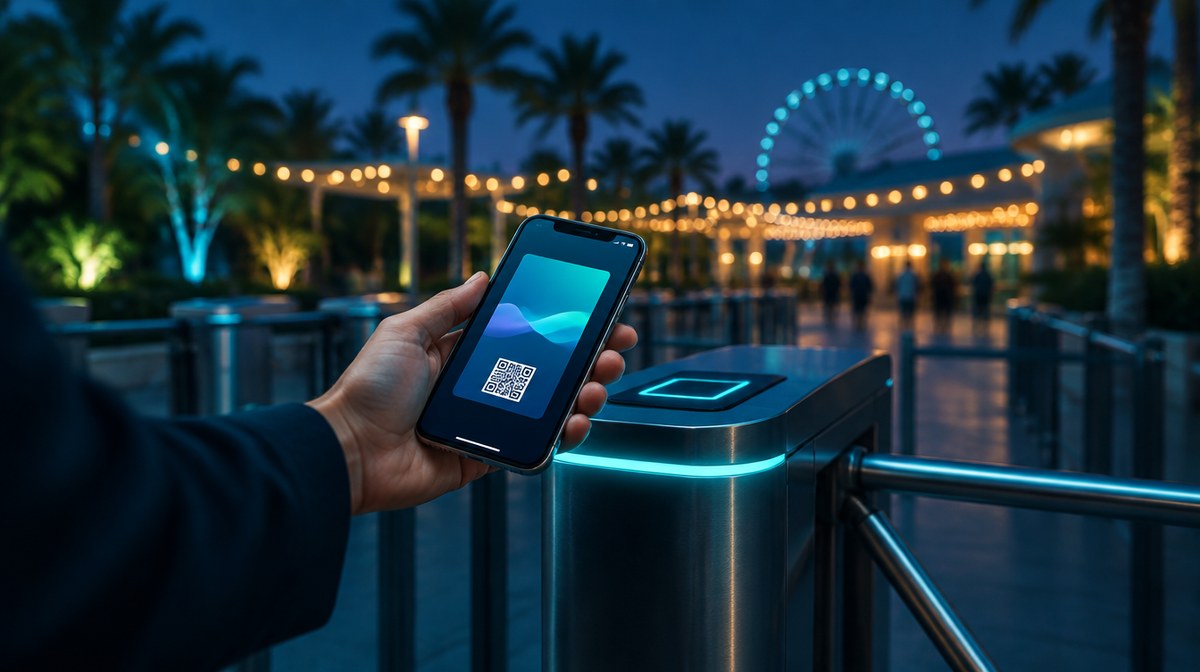
The UAE entertainment year has a switch, and it flips in October. Global Village opens, Miracle Garden blooms, desert camps light their first fires, waterparks and outdoor attractions fill up through to April — and almost every one of those gates reopens to a crowd it already met last season and can no longer reach. A digital season pass — a pass that lives in Apple Wallet or Google Wallet instead of an email inbox or a plastic card — fixes the strangest gap in the attraction business: the venues with the most loyal visitors in the country are the ones that start every season from zero.
The Season That Resets Every Year
Think about who a season pass holder actually is. A family that visited eight, ten, fifteen times between October and April. They know the parking, they know the food stalls, they brought their cousins. There is no more convinced customer anywhere in the UAE. And then summer arrives, the gates close or the crowds thin, and that family dissolves back into the general public — because the pass was a PDF in an email from last November, a barcode printed at the gate, or a plastic card that expired in a kitchen drawer.
So when the new season approaches, the venue does what every venue does: it buys its own visitors back. Radio, billboards, Instagram ads bidding against every other attraction launching the same month — all to reach people who already paid, already came, already loved it. The pass expired, and with it the relationship. Meanwhile the day-ticket visitor, who might have come five times last season if anyone had done the maths for them, was never offered a reason to commit at all.
What a Digital Season Pass Looks Like in a Wallet
Not an app. Attractions have tried apps, and the result is always the same: a family visiting ten times a year will not download and log into an app for it, and most customers never download branded apps at all. The fix is a pass in Apple Wallet or Google Wallet — the app already installed on every phone that walks through the gate.
Buying it puts it on the phone. The confirmation page or email carries one button: "Add to Wallet." No printing, no PDF hunting at the gate, no "it's on my husband's phone." Each family member's pass sits in their own wallet, and the same scanning setup that handles day tickets validates season passes — one scan, gate open, entry logged.
The pass shows what it's worth. The face of the pass carries the holder's name, the tier if you sell one (weekday, family, VIP), and the validity — "Season 2026–27 · valid until 30 April." A season pass a visitor sees every time they open their wallet keeps selling the next visit in a way a forgotten email never will.
Every visit is a record. Because every entry is a scan, the venue finally knows what a pass holder is: who came twelve times, who stopped coming in January, which nights pull members and which pull strangers. That is the difference between running a membership and running a discount.
The lock screen becomes your stage announcement. Wallet push notifications land on every pass holder's lock screen without an SMS bill. "Fireworks tonight at 9." "New zone opens this weekend." "Rainy day — indoor halls open, crowds low." The attractions that fill quiet Tuesdays are the ones that can whisper to their regulars for free, and a wallet pass is the only channel that does it without an app install.
Turning Day Visitors Into Season Pass Holders
The best month to sell a season pass is the first month of the season, and the best prospect is the person already inside. A QR code on the day ticket, at the exit, or on the table tent does the pitch at the exact right moment: "Coming back? A season pass pays for itself in three visits — scan to upgrade." The upgrade happens on the visitor's phone before the feeling wears off, and the pass is in their wallet before they reach the car park. Venues in entertainment and tourism spend fortunes reaching people who were literally standing inside the gate the night before — the QR-to-wallet upgrade closes that loop for the cost of a printed sign.
And when April comes, the pass doesn't vanish into a drawer. It stays in the wallet through the summer, which means September's renewal message — "Season 2027 passes are live, renew at last year's price this week" — goes to every single holder for free, on the lock screen, weeks before the billboard campaign would have reached a fraction of them. Early renewals become the season's first revenue instead of its biggest marketing expense, and lapsed holders get a win-back message instead of being re-acquired through ads.
Before the Gates Open Is the Moment
Here is why this matters in the next few weeks specifically: the UAE attraction calendar gives every venue one launch window. Set the wallet pass up before opening day, and the entire season compounds — every pass sold in October joins a reachable audience, every day visitor sees the upgrade QR from night one, every quiet midweek gets a free message instead of a paid campaign. Set it up in January, and half the season's passes are already PDFs you can't talk to.
An Afternoon to Set Up, a Whole Season to Compound
Launching a digital season pass is an afternoon of setup, not an IT project. Design the pass in your branding, set the tiers and validity dates, connect the "Add to Wallet" button to your existing ticket sales, print the upgrade QR for the gates — and write the three messages that run the season: the event-night announcement, the quiet-day nudge, and the renewal reminder for next September.
You already do the hard part: building a place families want to return to fifteen times a year. The pass just makes sure you can invite them back.
Book a short demo with Wally and see your season pass in Apple Wallet and Google Wallet before opening day.