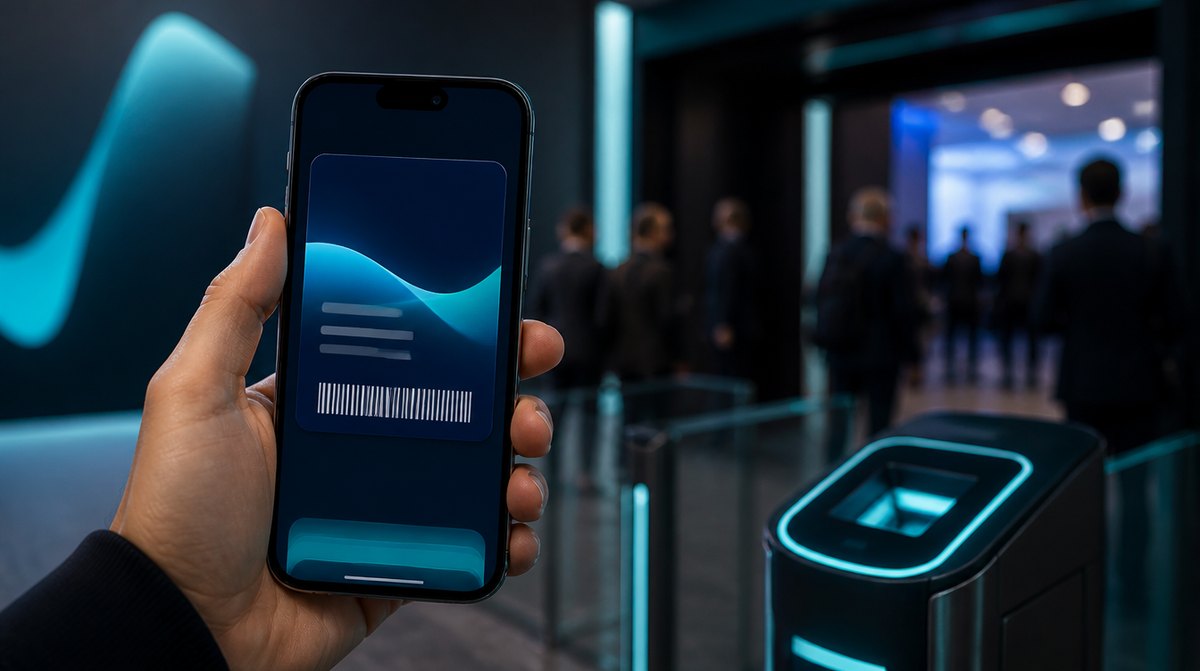
Every exhibition in the region has the same photograph: a queue of well-dressed people standing in a hotel ballroom foyer, waiting for a printer to spit out a badge with their name spelled slightly wrong. It is the first ten minutes of your event, the part every attendee remembers, and it is spent on stationery. A digital event badge — the attendee's pass saved straight into Apple Wallet or Google Wallet at registration — removes that queue entirely, and hands the organiser a live list of who is actually inside the room.
Why the Printed Lanyard Is the Weakest Part of Your Event
Badge printing feels like a solved problem because it has been done the same way for thirty years. Look at what it actually costs you.
It creates the only queue you can't hide. Registration desks are sized for an average, and events don't arrive at an average — they arrive in a spike at 9:05am when three keynote sessions are about to start. Two staff, one printer, four hundred people.
It goes wrong quietly. Names misspelled from a rushed form, the wrong ticket type printed, a delegate who registered twice and now holds two badges. Every fix is a person stepping out of line and a supervisor being called over.
It tells you almost nothing. A printed badge scanned at the door gives you a check-in count if you have the hardware for it. Most events don't, so the organiser finishes the day knowing how many badges were printed — not how many people walked in, when they arrived, or which sessions filled up.
And it ends in a bin. Plastic holder, printed insert, lanyard, per attendee, per day. For a two-day expo with three thousand delegates that is a real line item, and an awkward one to defend in a sustainability report.
What a Wallet Badge Actually Does
A wallet pass is a small live file that sits in the phone's built-in Wallet app, next to boarding passes and bank cards. There is no event app to download and no account to create — the attendee taps a link in their confirmation email, or scans a QR code, and the badge is on their phone in about four seconds. The technical version of that file is the pkpass format.
Once it's there, it does four things a printed insert cannot.
It scans at the door. The badge carries a QR code or an NFC tap, and the phone at the entrance verifies it in one motion. No printer, no desk, no matching a name against a spreadsheet. Attendees walk in the way they board a flight.
It shows the right ticket type. Delegate, exhibitor, speaker, press, VIP, contractor — the badge is coloured and labelled by category, so your door staff can see at a glance who belongs in the VIP lounge without reading small print upside down.
It updates itself. This is the part organisers underestimate. Programmes change: a keynote moves halls, a workshop is rescheduled, a room floods. You edit the pass once from a dashboard and every attendee's badge redraws itself. Nothing to reprint, nothing to reissue, no addendum sheet at the desk.
It reaches the lock screen for free. Every wallet pass can receive push messages at no cost per send — no SMS credits, no email open rates. "Doors open in 20 minutes, Hall 4." "Your session moved to 2:30pm." "Networking drinks start now on the terrace." These land on the phone of someone who is standing in your venue, which is the most useful message timing in marketing.
The Data You Get on Monday Morning
An event's value to a sponsor is proof of attendance, and printed badges give you almost none. A digital badge that scans at every entry point gives you a timestamped record: total arrivals against registrations, the real no-show rate, arrival curve by hour, which halls and sessions filled, and which exhibitor stands got traffic if you scan there too.
That changes two conversations: sponsor renewals, because you can show that 1,840 of 2,300 registrations physically arrived and 61% sat in the sponsored session instead of quoting the registration number and hoping — and next year's planning, because you know the desk spike was 9:00 to 9:40, not "the morning".
It also gives you something a lanyard never leaves behind: the badge is still on the attendee's phone the week after the event. When registration opens for next year, that is a list of verified past attendees you can message directly, for free, from the lock screen.
Where This Fits in the UAE Event Calendar
The Gulf runs on a dense fourth-quarter calendar — trade expos, conferences, summits, awards nights, government forums — mostly delivered by small teams handling several events a season. Wallet badges suit that reality: nothing to buy, nothing to install at the venue, door staff scanning with a phone.
It works the same way for smaller formats that never justified a badge printer at all: a 120-person breakfast briefing, a members-only dinner, a monthly meetup, a training course with certified attendance. Anything where you need to know who came.
The same pass can carry more than entry. A conference badge can double as a venue access pass for restricted zones, an event ticket for a paid gala night in the same programme, or a delegate membership card that stays valid all year for an association's event series. And if you're weighing up how attendees should be scanned at the gate, our comparison of NFC versus QR for event entry covers the trade-offs.
Getting It Live Before Your Next Event
Setting up a digital event badge takes an afternoon, not a procurement cycle. You design the badge in your event's branding, choose the fields it displays — name, company, ticket type, dates, hall, session times — and pick how attendees receive it: a link in the confirmation email, a QR code on the printed invitation, or a scan at the door for walk-ins. Then you brief the door team on one sentence: scan the phone.
The printer stays in the store cupboard as a backup for the handful of guests who genuinely want paper. Everyone else arrives, taps, and is inside your event while the old queue would still have been forming.
Book a short demo with Wally and see your own event badge in Apple Wallet and Google Wallet — scanned at the door, updated from one dashboard, and still on your attendees' phones when next year's registration opens.