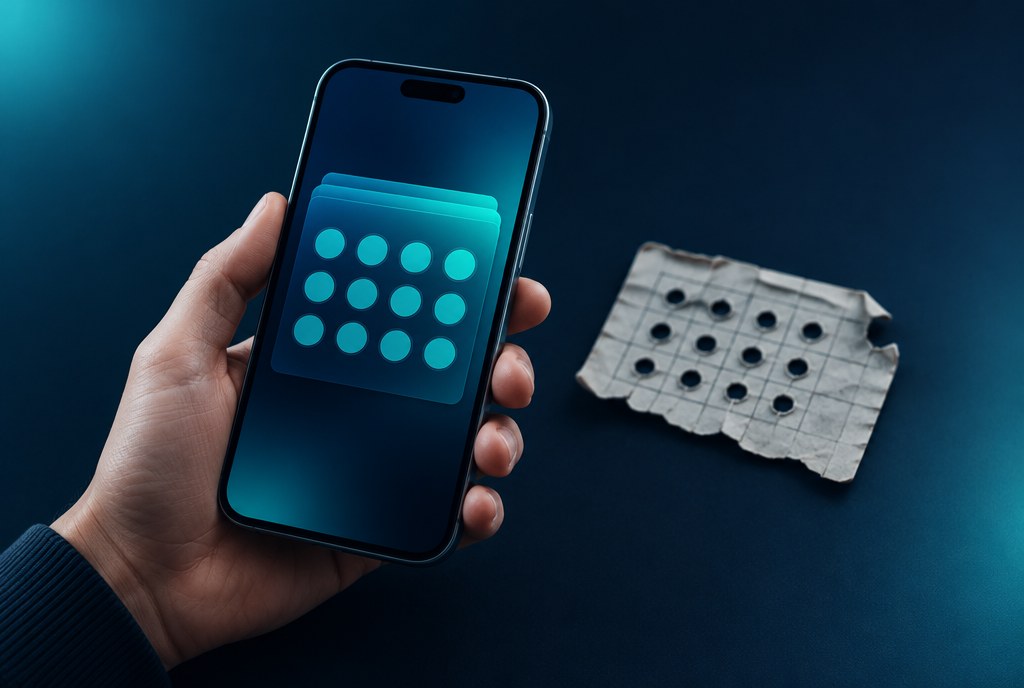
Somewhere in your café, salon or car wash, a tenth coffee is being given away that nobody earned. Loyalty card fraud is the quietest leak in small business: nobody reports it, no alarm goes off, and the till balances perfectly at the end of the day. But every paper punch card program leaks rewards — to customers who stamp their own cards, to staff who over-stamp for friends, to cards that get shared around an office — and because it's invisible, most owners only sense it as a vague feeling that the program gives away more than it gets back.
The Four Ways Loyalty Card Fraud Actually Happens
Forget sophisticated scams. The fraud that drains small-business loyalty programs is mundane, and it comes from four directions:
1. The self-service stamp. Paper cards get stamped with a generic stamper that sits in a drawer by the till — or worse, a pen tick. A customer with ten minutes and a similar stamp (or a borrowed moment while staff turn around) fills their own card. It sounds petty until you remember a free wash or a free blow-dry costs you real product and real staff time.
2. The generous colleague. This is the one owners don't like to talk about. A staff member stamps twice "because the customer is nice," stamps friends' cards without a purchase, or hands a nearly-full card to someone having a bad day. Each act is tiny and well-meaning. Across a year and a team, it quietly rewrites the economics you designed — your stamp math assumed ten purchases per reward, and reality is delivering six.
3. The shared card. One punch card circulates around an office of eight people, collecting a stamp from every lunch run. The card completes weekly, the "loyal customer" doesn't exist, and your program rewards a group that would have come anyway — while teaching you nothing about any of them.
4. The photocopy and the screenshot. Completed paper cards get photocopied. Reward coupons get photographed and shown twice at two branches. Without a record of what was redeemed where, a multi-branch business has no way to catch the same free meal claimed three times.
Why Paper Makes It Invisible
Here's the real cost, and it isn't the free coffees. A stamp card program has exactly one source of truth: the ink on the card in the customer's pocket. You have no copy. So you can't see redemption rates, can't spot that one branch redeems three times more than the others, and can't tell whether your program's cost is reward generosity or leakage. When owners say "we tried a loyalty card and it didn't pay off," this is often what happened — the program wasn't too generous, it was unguarded.
And paper puts your staff in an impossible position. Challenging a suspicious card means accusing a customer across the counter with no evidence either way. So nobody challenges anything, the stamper stays in the drawer, and the leak continues — politely.
How a Digital Punch Card Stops Loyalty Card Fraud
Move the same program into Apple Wallet and Google Wallet and the leak closes — not by policing customers, but by changing what's physically possible. A digital punch card works like this: the customer joins in one QR scan (no app to download), the card lives in their wallet next to their bank cards, and stamps are added with one scan by your staff at the till.
Only your team can stamp. Stamps are issued through the scanning app on a staff phone — there's no stamper in a drawer, and no way for a customer to add their own. Every stamp is tied to a staff account, a time and a branch.
Every stamp has a record. If card #4821 collected four stamps in ten minutes on a Tuesday, you can see it. If one team member issues double the stamps of everyone else on the same shift pattern, you can see that too — and have a quiet, factual conversation instead of a suspicion.
One card, one phone, one person. A wallet pass is unique to the phone it lives on. It can't be photocopied, and a screenshot doesn't scan — the code is validated against the live pass, so a reward redeems exactly once, at one branch, and then it's marked used everywhere.
Redemptions close themselves. When the free coffee is claimed, the card resets on the customer's phone in real time. No torn corners, no "I'll bring the full card next time," no double claims.
The same leak exists beyond stamps, by the way. Gift vouchers, prepaid packages and membership discounts all suffer the paper problem — which is why businesses that start with a wallet stamp card usually move their gift cards and session packages into the wallet next.
Keep It Generous — Just Not Leaky
One warning: don't let fraud-proofing turn your program hostile. The goal isn't to treat customers like suspects — it's the opposite. When every stamp is earned, you can afford to be more generous with the customers who actually show up: a closer reward, a surprise bonus stamp on slow days, a birthday treat. Honest regulars are effectively subsidising the leakage today; closing the leak returns that budget to them. And because every scan builds a real customer database, your rewards start landing with the right people at the right time instead of whoever held the card last.
Close the Leak This Week
If you run a stamp card on paper today, you don't need to redesign the program — the reward, the stamp count and the branding can stay exactly as they are. With Wally, you design the card in the dashboard, print one QR for the counter, and honour existing paper cards by granting their current stamps on the new digital card — customers lose nothing, and from that day forward every stamp is real. Cafés, salons, restaurants and car washes across the UAE run exactly this setup with the scanning app on a staff phone and nothing else.
Wally puts stamp cards, loyalty cards and memberships in Apple Wallet and Google Wallet — joined in one scan, validated on every stamp, with the dashboard, scanning app and unlimited push notifications included. Book a short demo and run a loyalty program where every reward goes to someone who earned it.