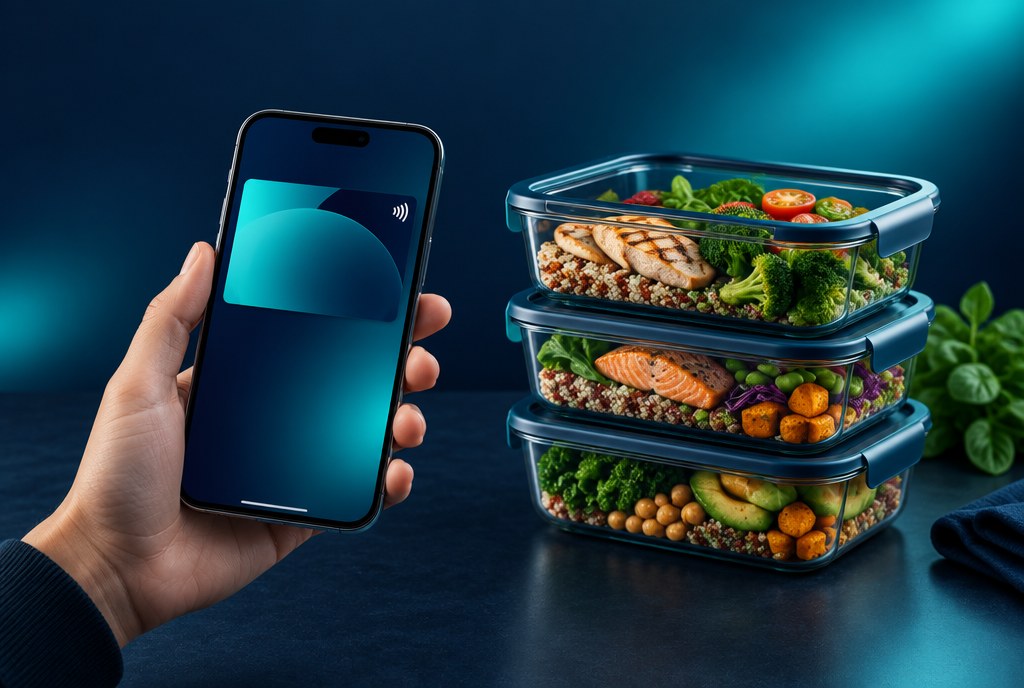
Dubai probably has more meal prep companies per square kilometre than any city on earth. Hundreds of kitchens cook, pack and deliver weekly plans across the UAE, and almost all of them fight the same war: paying Instagram more and more to acquire a customer who quietly disappears after the first month. A meal plan loyalty program — a card in Apple Wallet or Google Wallet instead of another app or another discount code — attacks the actual problem, which was never getting customers. It was keeping them past week four.
The Week-Four Cliff
Every meal plan operator knows the pattern. A customer signs up in a burst of motivation — new gym membership, a wedding coming up, October weather pulling everyone back outdoors. They love week one. They're used to it by week three. Then week four arrives with a travel weekend or a few dinners out, and they "pause the plan for now." They mean it as a pause. It becomes an ending — not because the food failed, but because nothing ever invited them back.
Here's what makes that churn so expensive in this market: acquisition is brutal. Meal plan ads compete against every other kitchen in the city for the same fitness-minded audience, and the cost of winning one subscriber often eats most of the first month's margin. The business only works on the renewal — and the renewal is exactly the moment most companies go silent. The plan runs out, no reminder lands, and the customer who was 80% likely to continue if asked on the right day simply drifts to whichever competitor's ad catches them next.
What a Meal Plan Loyalty Program Looks Like in a Wallet
Not an app. Your customers already juggle a delivery app, a gym app and a macro tracker; they will not download one more, and most customers never download branded apps at all. The fix is a card in Apple Wallet or Google Wallet — the app already installed on every phone you deliver to.
Joining takes one scan. Print a QR code on the card that goes inside the first delivery bag: "Scan to track your plan." The customer scans it in their kitchen, taps "Add to Wallet," and your card is on their phone. No form, no password, no app store. From that moment, the company — not just WhatsApp threads with a sales agent — has a direct line to every active subscriber.
The plan becomes visible. The face of the pass shows what the customer actually cares about: days remaining on the current plan and the renewal date. A plan that reads "6 delivery days left" sells its own renewal in a way an invoice never will. The same pass can carry a stamp card underneath — every completed month earns a stamp, five months earns a free week. Suddenly month four isn't the natural exit point; it's one stamp away from something.
Renewals get a lock-screen reminder — free. Wallet push notifications land on the lock screen without an SMS bill or an email fighting the promotions tab. "Your plan ends Thursday — renew today and keep your menu rotation" is the single highest-value message in the meal plan business, and today most kitchens either don't send it or pay per-message to send it late. On a wallet pass it goes out automatically, to everyone, for free.
The Pause Is Not the End — If You Can Reach Them
Paused customers are the richest list a meal plan company owns: people who already paid, already ate the food, already fit the routine into their lives. The reason they rarely come back is that no channel reaches them once the deliveries stop. The wallet card stays on their phone after the pause — and that changes the maths of winning back lapsed customers. Ramadan schedule flips, summer travel ends, October fitness season starts: each one is a moment when a single lock-screen message — "Back to routine? Your old plan is one tap away" — restarts subscriptions that ads would have had to buy all over again at full acquisition cost.
The back of the pass does quiet work too: your WhatsApp line for menu changes and delivery notes, the link to update an address, and the join QR itself. Meal plans spread through gym floors and office lunches — when a subscriber shows a colleague the card, the referral can happen on the spot instead of dissolving into "I'll send you the link."
Why October Makes This Urgent in the UAE
The meal plan year has a rhythm here. Summer empties the city and pauses half the subscriber base; October brings everyone back, the weather turns, gyms and padel courts fill, and sign-ups spike through to the new year. That spike is when acquisition is most expensive — every kitchen in the city is bidding for the same audience at the same time. The companies that set up a wallet card in September walk into the season with two advantages: every new October subscriber joins a retention system from delivery one, and every paused summer customer gets a free "welcome back" message instead of being re-acquired through ads. It's the same logic every restaurant and wellness business discovers about owning the customer relationship — applied to the one food business where the entire model is the repeat purchase.
An Afternoon to Set Up, a Season to Compound
Launching a meal plan loyalty program on wallet passes is an afternoon of setup, not a software project. Design the card in your branding, decide what the face shows (days left, renewal date, monthly stamps), print the QR insert for the delivery bags, and write three automatic messages: the renewal reminder, the win-back, and the new-menu announcement. From then on it compounds — every bag that goes out recruits a member, every plan that ends gets asked to renew, and every pause gets an invitation back.
You already do the hard part: cooking food good enough that people eat it five days a week. The card just makes sure the relationship survives the first pause.
Book a short demo with Wally and see your meal plan card in Apple Wallet and Google Wallet before the October rush.