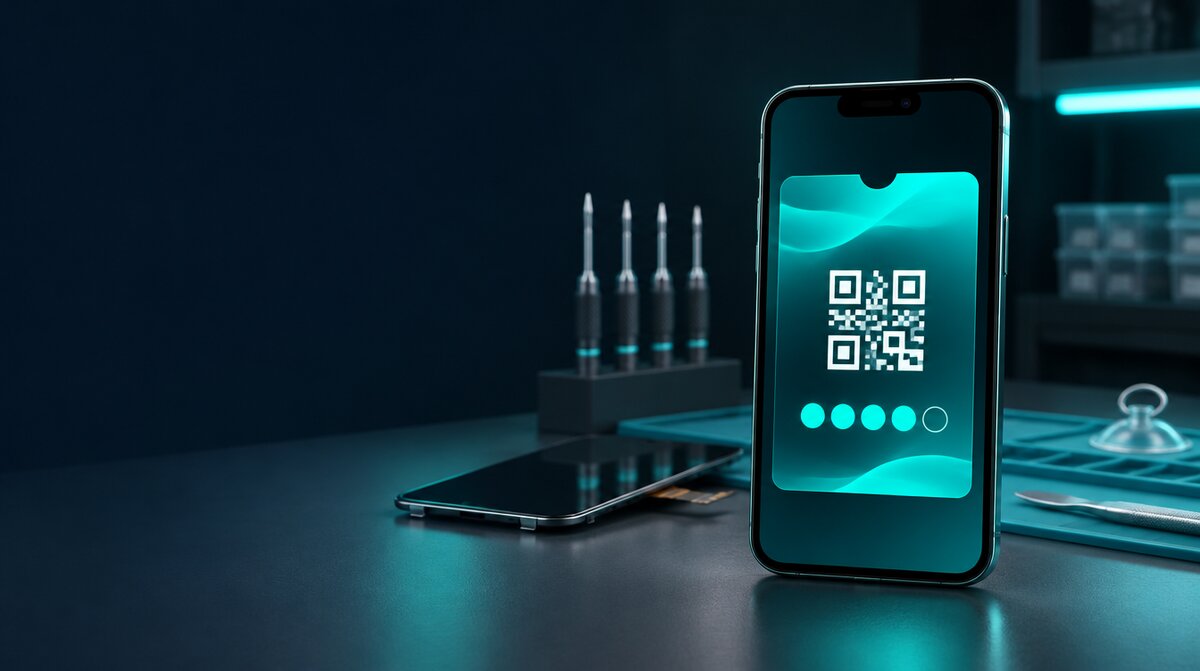
A phone repair shop is the only business in retail where the customer hands over their phone, sits three metres from the counter for forty-five minutes — and still walks out anonymous. No other shop gets that much face time and keeps that little of it. A phone repair shop loyalty program that lives in Apple Wallet and Google Wallet turns those forty-five minutes into the start of a relationship: the customer leaves with a fixed screen and your card on their phone, and you leave with a named customer you can reach the next time a device in their house breaks.
Repair Only Looks Like a One-Time Business
Ask a repair shop owner about loyalty and you'll hear the same objection: "people only come when something breaks." True — and that's exactly why the maths works. The average UAE household runs five or more devices: two phones, a tablet or two, a laptop, a console, a smartwatch. Screens crack on no schedule, but batteries fade on a very reliable one — eighteen to twenty-four months and the battery-health complaint starts. Add screen protectors, cases, cables and chargers, and the household that visited you once has reasons to come back several times a year.
The problem is that none of those returns are yours by default. The customer who loved your screen repair in March doesn't remember your shop's name in November when the tablet dies. They search again, and this time the mall kiosk or the marketplace listing with the paid placement wins. You did the hard part — earned trust with a real repair — and then let the relationship end at the receipt.
The timing makes it worse right now: White Friday and the December gifting season are about to put thousands of new devices into UAE homes. Every one of them needs a case, a protector and — eventually — a repair. The shops that captured this year's customers will be on those lock screens. Everyone else will be back in the search results, paying for clicks.
A Phone Repair Shop Loyalty Program Built Around the Drop-Off
You don't need to engineer a join moment — repair has the best one in retail. The customer is standing at your counter, phone in hand, with time to kill. A QR stand next to the card machine: "Scan to join — track your repair and warranty on your phone." Fifteen seconds later your card is in the Apple Wallet or Google Wallet they already have. No app to download — nobody installs an app for a shop they visit twice a year — no form, no password.
From there the pass does the shop's talking:
"Your phone is ready" lands on the lock screen. Today that message is a phone call the customer misses (their phone is on your bench) or a WhatsApp from an unknown number. A free wallet push notification to the card they joined with — many customers carry a second device, and the push is waiting the moment their repaired phone comes back online — replaces the call-back chaos at zero cost per message.
The warranty lives on the pass. Every repair shop promises a 90-day warranty; almost every customer loses the paper slip. Put it on a digital warranty card instead: repair date, device, what was replaced, warranty expiry — on the back of the pass, impossible to lose. It's the single strongest trust signal a repair shop can send, and it quietly advertises you every time the customer opens their wallet.
Accessories earn stamps. Screen protectors, cases and cables are your margin — and the purchases customers repeat most. A digital punch card (five protectors fitted, the sixth free) gives the walk-in a reason to buy the protector from you instead of the marketplace, and the visible 3-of-5 on the pass face pulls them back for the next one.
The battery reminder is the sleeper hit. You know the repair date and the device. Eighteen months later, a push — "batteries slow down around now; free battery health check this week" — reaches a customer with a genuinely degraded battery, from the shop that fixed their screen. That's not marketing; that's the most useful message they'll get all month, and it books a bench slot you'd otherwise wait for.
The Office Question: "Who Fixed Your Screen?"
Every cracked screen in an office or family WhatsApp group triggers the same question, and the answer is the only marketing channel repair shops have ever really had. A wallet card finally makes it count: a tracked referral reward on the pass gives the recommender AED credit toward their next accessory or repair, and the friend a discount on their first fix. The colleague who sends you four cracked screens a year stops being invisible.
Small businesses compound it. The office manager with fifteen staff phones is the best customer a repair shop can have — give the company account its own card with a visible priority tier (same-day bench slots, fleet pricing) and you've turned one walk-in into a contract. Either way, every scan is quietly doing what repair shops never do: building a customer database out of people who already trust you with their most personal device.
Set Up Before the Gifting Wave
Setup is an afternoon: your logo and colours on the pass, a QR stand at the drop-off counter, one line for the technician — "scan this, your warranty lives on your phone." From day one, every repair captures a household instead of closing a ticket. By the time December's new devices start slipping out of hands in January, you're not a search result — you're already in their wallet.
The trust is already earned at the bench. Get started with Wally and make sure the next broken screen in that household comes back to you.