A protein tub lasts about forty days. Pre-workout, six weeks. Creatine, two months. Almost everything a supplement store sells runs out on a schedule you could mark on a calendar — and yet most stores have no idea whether the customer who bought a tub in October came back in November or drifted to an online marketplace. A supplement store loyalty program that lives in Apple Wallet and Google Wallet turns that built-in repurchase clock into your biggest advantage: the store finally knows who its regulars are, and the regulars get a reason to keep walking past the discount sites and back through your door.
The Repurchase Clock Nobody Is Watching
Supplement retail has the strongest natural repeat cycle in the UAE outside of groceries. Nobody buys one tub of whey and stops training. The question is never whether the customer buys again in five weeks — it's where. And right now the answer is decided by whoever reaches them first: the marketplace app with a push notification, the gym's own shop, or the Instagram ad from a competitor two blocks away.
The store that sold the first tub usually loses that race for an embarrassing reason: it never captured the customer at all. The sale went through the till, the customer walked out, and the relationship ended at the receipt. When the tub runs out on day forty, the store is relying on pure memory and habit — against competitors armed with reminders.
It's November, which makes the leak expensive twice over. The Dubai Fitness Challenge has filled every gym in the city with people starting programmes, and January's resolution wave is two months out. These are the exact weeks a supplement store meets more first-time buyers than at any other point of the year — and the exact weeks most of those first-timers are bought once and lost.
A Supplement Store Loyalty Program Customers Actually Join
The old fixes don't fit the counter. Paper stamp cards get lost in gym bags and say nothing about what the customer buys. An app is a dead end — nobody installs an app for a shop they visit monthly, and we've covered why customers don't download apps. A phone-number-at-the-till points scheme captures data but gives the customer nothing to look at, so it's forgotten by the car park.
A wallet pass skips all of it. A QR code on the counter, next to the shaker bottles: "Scan to join — your first stamp is today's tub." Fifteen seconds later your store's card sits in the Apple Wallet or Google Wallet already on their phone, in your colours, showing their stamps or points on the front. No download, no form, no password — the same phone they just used to pay.
From there, the card maps onto how supplement buying actually works:
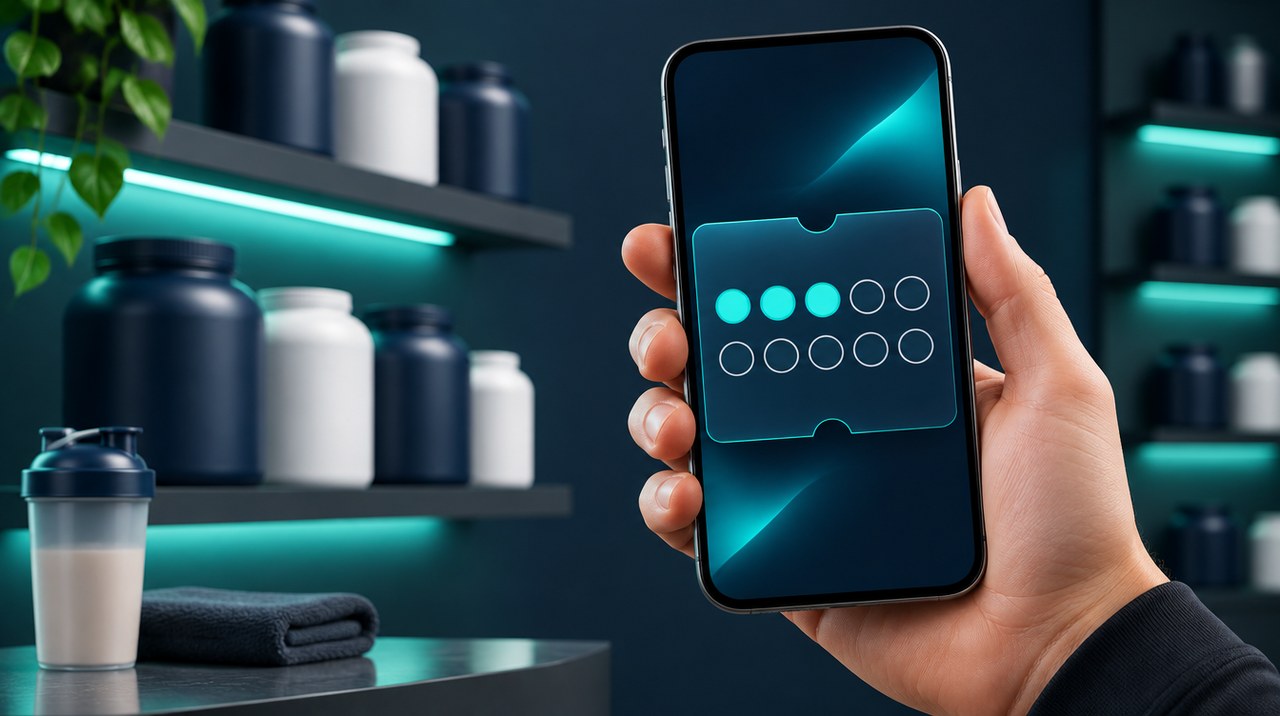
Tubs earn stamps. A digital punch card — buy nine tubs, the tenth free — is the cleanest offer in a category where the customer already knows they'll buy nine tubs this year somewhere. The visible 6-of-10 on the pass face does what no discount code can: it makes your shop the default answer to "where do I re-up?"
Big baskets earn points. For stores selling stacks — protein, creatine, vitamins, accessories — points per dirham with a visible balance rewards the customer who spends AED 600 a visit, not just the one who visits often. A tier on top (Member, Athlete, Elite) gives your biggest buyers early access to new stock and a status they won't throw away for a marketplace coupon.
The refill reminder lands for free. This is the one that pays the bill. A wallet push notification lands on the customer's lock screen without SMS fees or an algorithm in the way. "Your tub's about running out — 10% off your refill this week" sent five weeks after purchase reaches the customer at the exact moment the scoop is hitting the bottom. The marketplace was going to send that reminder; now you send it first.
Built for How Supplement Stores Really Sell
New-stock drops fill the shop. Supplement customers are enthusiasts — a new flavour, a restocked pre-workout, or a visiting brand is news they want. A lock-screen push to every cardholder ("the new batch landed today") turns a delivery into a busy weekend, free.
Gym partnerships become trackable. Most stores run informal deals with nearby gyms and coaches. Put a join QR on the gym's notice board or the coach's story, and every sign-up is tagged to its source — you finally see which partnership sends buyers and which sends nothing. Pair it with a referral reward on the pass itself, and the training partner who tells the whole gym about you earns a free shaker — while you watch your best promoters show up in the data.
Seasonal waves become campaigns. Fitness Challenge in November, resolutions in January, summer-shred season in April, and the Ramadan reset — supplement demand in the UAE moves in waves. With every past buyer holding your card, each wave starts with a push to people who already trust you, instead of another ad auction against every store in the city. Your card is also the fastest way to build a customer database a shop this size could never assemble by hand.
What It Looks Like in Week One
Setup is an afternoon, not a project. Your logo and colours on the pass, one QR stand by the till and one on the door, a single line for staff: "scan this — your stamps live on your phone." From the first day, every sale captures a customer instead of closing one. Five weeks later, the first refill pushes go out, and you watch October's first-timers walk back in before the marketplace app ever reaches them.
The customers are already coming — the Fitness Challenge crowd is in the aisles right now. The only question is whether this wave leaves with just a tub, or with your card next to their boarding passes. Get started with Wally and put your store on the lock screen of everyone who trains.