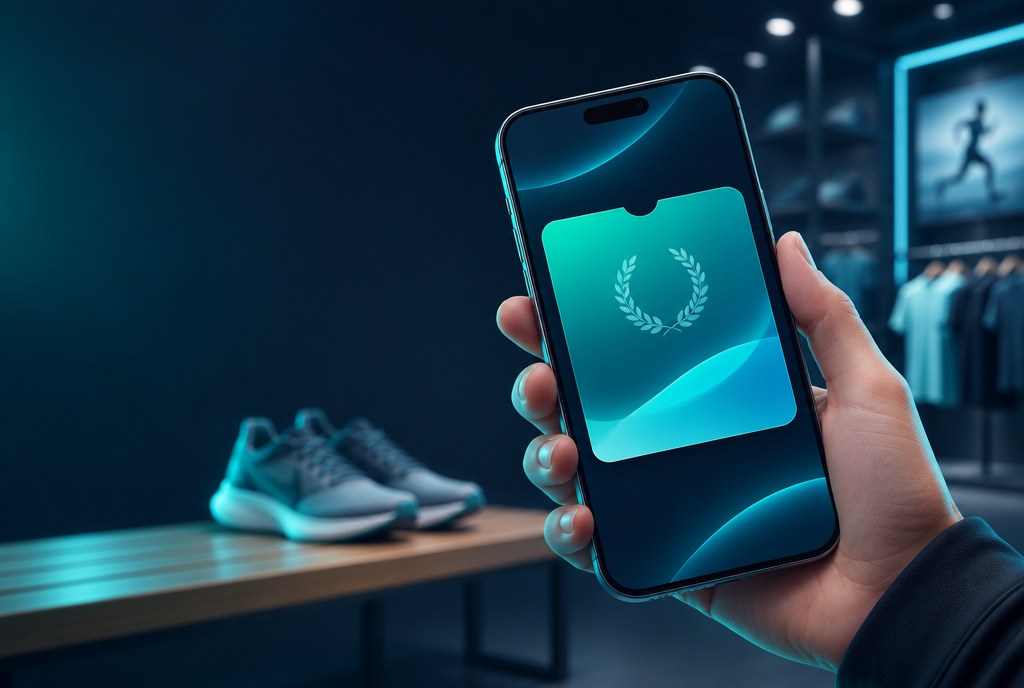
Running shoes die on a schedule. Somewhere between 500 and 800 kilometres, the foam gives up — which means a runner training four days a week needs a new pair every four to five months, plus gels, socks and race kit in between. No other shoe on the high street gets replaced that predictably. Yet most UAE running stores fit a customer perfectly, send them out the door, and then hope they remember the shop when the tread goes — usually around the time an online marketplace is showing them the same model at a discount. A running store loyalty program that lives in Apple Wallet and Google Wallet fixes that leak, and it starts with one QR code and a 15-second scan at the till.
The Fitting Is Yours. The Reorder Isn't.
A specialist running store earns its customers the hard way: twenty minutes on the treadmill, a gait analysis, a stack of boxes, and a fit the runner can feel on the next morning's run. That service wins the first pair. The problem is what happens to the relationship afterwards — which, in most shops, is nothing. The customer's shoe model, size and drop preference live in the salesperson's memory or nowhere at all. The till sees payments, not people.
So the reorder — the easiest sale in retail, a customer who already knows exactly what they want — goes to whoever shows up first. Four months later the shoe is worn, the runner types the model name into a search bar, and a marketplace undercuts you on the pair you fitted. The industry has a word for it: showrooming. You paid for the treadmill and the expertise; the platform collects the repeat.
And right now is when it costs the most. The UAE's running season is in full stride — Dubai Fitness Challenge filling the tracks, Dubai Run putting tens of thousands of people on Sheikh Zayed Road, and marathon season stretching to spring. Every week of this season, first-timers walk into running stores for their first proper fitting. Whether they come back in March is decided by what happens at the till today.
A Running Store Loyalty Program Built on the Replacement Clock
The old answers don't fit this trade. Nobody downloads an app for a shop they visit three times a year, and a paper card is beneath a store that measures cadence. A wallet card is the right tool: the customer scans a QR at the till, and a card lands in the Apple Wallet or Google Wallet already on their phone — no app, no form, no password. From there:
Visible credit beats a forgotten discount. Every pair and every accessory earns points or dirham credit that sits on the face of the pass, where the runner sees it every time they open their wallet. When the next pair is due, AED 60 of earned credit at your store beats a marketplace coupon — because it's already theirs, and it expires if they defect. That's the quiet economics of a tiered loyalty program: the more a customer has built up with you, the more switching costs them.
The replacement reminder is the money message. You know roughly when the shoe you sold will die — the date is in the sale. A free wallet push notification timed four months out — "your Pegasus has some serious mileage on it. Come in for a free tread check" — lands on the lock screen exactly when the search bar would otherwise win. It reads as service, not marketing, because it is: you're the shop that remembers their shoes.
Gels and socks run on a punch card. The small stuff repeats weekly in season. A digital punch card on nutrition and accessories — tenth item free — gives the Saturday-long-run crowd a reason to buy their gels from you instead of adding them to an online basket.
Race week becomes a channel. Your members' calendars are public: everyone is racing the same half marathon. A push the Monday before — "race week: gels, anti-chafe and throwaway layers in stock, members get priority on pacing advice" — fills the store in the exact week runners spend the most.
The lapsed runner gets flagged. When a four-pairs-a-year regular hasn't earned a point in eight months, something changed — an injury, a move, a defection. You can finally see it, and one win-back push reaches someone who used to run past your shop twice a week.
The Run Club Is a Membership — Treat It Like One
Most specialist stores host a weekly run club, and it's usually the most under-counted asset in the building: thirty people in your brand's route photo, none of them on a list. Put the club on the same card. A scan at the start line stamps attendance, streaks earn gear discounts, and a Member / Racer / Ultra tier gives your most visible customers a status they'd lose by shopping elsewhere. The club is also how running stores actually grow — "where did you get those?" said mid-run — so give every member a tracked referral link and let the recommendation that already happens on every group run earn the person who made it a reward.
All of it compounds into the thing the store never had: a named, reachable customer database — who runs in what, when they bought it, and when they'll need the next pair.
Set Up Before the Weekend Long Run
Setup is an afternoon, not a project: your logo and colours on the pass, a QR stand at the till and one on the run-club flag, and a single line for staff — "scan that, your member card goes on your phone, it'll remind you when these shoes are done." No new hardware, no POS change. Wally runs wallet-based loyalty for UAE retailers of every kind, from supplement stores to bike shops — running retail is the same playbook with a faster clock.
The season is at its peak and every fitting this month is a four-year customer or a one-pair stranger — the till decides which. Get started with Wally and put your store's card in every runner's pocket before the next 500 kilometres are up.